
How many Neurons Am I losing As I Age ?
How many Neurons Am I losing As I Age ?
A Bruno Byte “Tidbit” From Dr. Richard L. Bruno, HD, PhD Director, International Centre for Polio Education Question: My leg muscle weakness seems to be increasing faster as I get older. I read that polio survivors lose 7% of muscle strength each year. How do I stop losing strength? Answer: PPS symptoms on their own don't increase more quickly as you get older, but, two things do happen over time:
1) Everyone over the age of 60 loses 1% of their motor neurons each year, not 1% of their muscle strength. A study by Dr. Alan McComas of untreated polio survivors (untreated meaning that they did not slow down, use braces, crutches or wheelchairs) found that they lost as much as 14% of their remaining MOTOR NEURONS (7% each year) over the two years of his study.
2) Some polio survivors will ignore muscle weakness for years and so do get weaker over time. One of our Post-Polio Institute studies found that polio survivors who applied our “conserve to preserve” protocol closer to the beginning of their symptoms had less muscle weakness, fatigue and pain after treatment than those who waited to be treated.
3) Bottom Line: Treating PPS sooner is better than later because symptoms will increase if you don't treat them. Some polio survivors will ignore PPS symptoms until they "need" an assistive device. Unfortunately by then it's too late because the motor neurons have died a natural or unnatural death.
The Encyclopedia of Polio and Post-Polio Sequelae contains all of Dr. Richard Bruno’s articles, monographs, commentaries and “Bruno Bytes” https://www.papolionetwork.org/encyclopedia.html
AGM Details & Committee nomination form
Save the date — Annual General Meeting All members are warmly invited to attend this year’s Polio SA Annual General Meeting
When:1pm, Sunday 27th September 2020
Location:Thebarton Community Centre Cnr South Rd & Ashwin Parade ,Torrensville South SA 5031
Guest Speakers Dr Quadros and demonstration from Technology Aging and Disability South Australia .
Recent Committee news Maureen Kowalick has stepped down from Polio SA committee. We would like to thank Maureen for all her years volunteering for the committee and providing such a wonderful service taking phone calls and distributing vouchers to members and being an advocate for Polio Survivors. A very valued member of the committee for many years.
We also welcome Nik Surikov back to the committee thankyou Nik.
Winter 2020- Newsletter
In this edition
1. From Polio SA
2. AGM Details & Committee nomination form
3. How many neurons am I losing as I age?
4. Helen Harrison - My Polio Story
5. ATFA Petition
6. Open Letter to Prime Minister
7. Thank you William (Bill) Green
8. Polio SA Member subscription form 2020/21
9. Notice Board
10. Just for laughs
11. Member services
In this edition
1. From Polio SA - Thank you Brett we will miss you
2. AGM details and committee nomination form.
3. How many neurons am I losing as I age ?
4. Helen Harrison - My Polio Story
5. Assistive Technology for All Petition
6. Open Letter to the Prime Minister
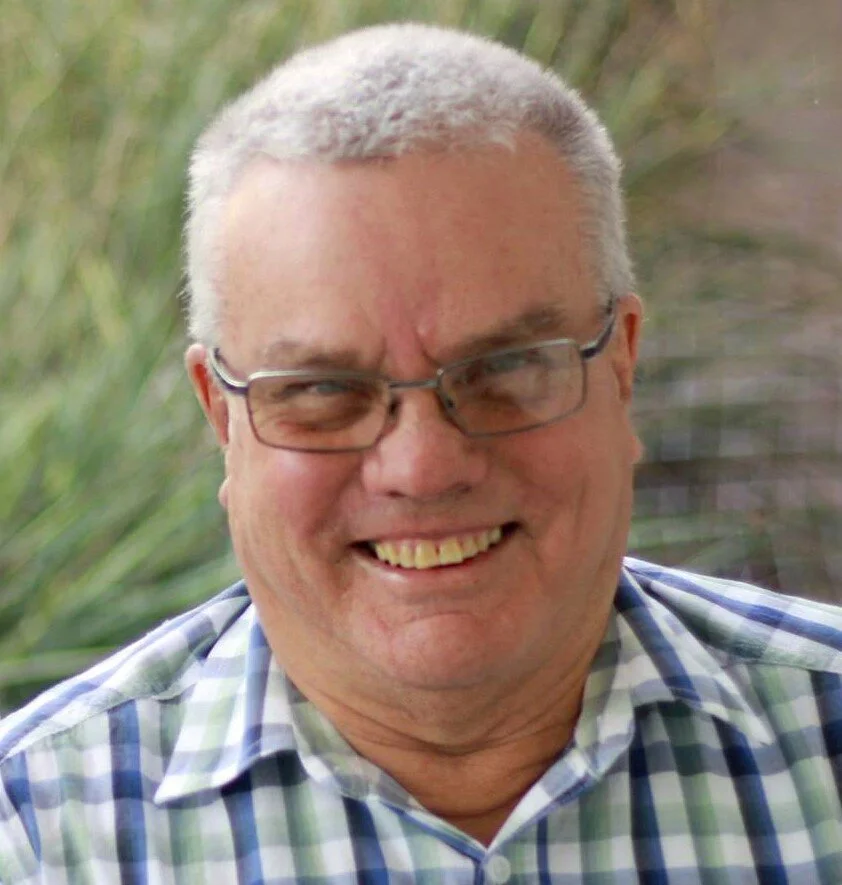
Thankyou Brett such a sad loss for us all . We will miss you dearly
It is incredibly sad that we have to inform you of the passing of our President Brett Howard.
Brett passed away peacefully surrounded by his family on Friday 5th June 2020.
Brett was President of Polio SA for over 10 years and originally accepted the role temporarily until he was elected and was a shining light for us. He advocated relentlessly for Polio Survivors and he will be dearly missed. Brett was also a board member and Vice president at Polio Australia.

It is incredibly sad that we have to inform you of the passing of our President Brett Howard.
Brett passed away peacefully surrounded by his family on Friday 5th June 2020.
Brett was President of Polio SA for over 10 years and originally accepted the role temporarily until he was elected and was a shining light for us. He advocated relentlessly for Polio Survivors and he will be dearly missed. Brett was also a board member and Vice president at Polio Australia.
Brett was instrumental in organising Dr William De Mayo to the Australasian Conference in Sydney to talk to Polio Survivors and then bringing Dr DeMayo to Adelaide to talk with Polio SA Members and community.
He also organised the involvement of Community Business Bureau who auspice our Grant to provide things like massage vouchers, hydrotherapy, newsletter printing, website, and other resources that we need as an organisation. He was instrumental in revising and publishing brochures and books on the Late Effects of Polio.
The committee is forever grateful that we had time with Brett who was so understanding and easy to work alongside and nothing was too much trouble for him. Always ready to listen to any ideas.
Everyone that has dealt with him has said what a top bloke. We appreciate all that Brett did for our Organisation and as a volunteer what a huge commitment and a lifelong legacy.
Our condolences to Brett’s family you are in our thoughts.
Thankyou Brett.
All at Polio SA.
Join us on Thursday 18th June 2020 at 10am for Online zoom session
Hello! We'd love you to join one of our upcoming Zoom chats. Meet other polio survivors (and partners!) in your state/region, discuss the Late Effects of Polio, and hear about our clinical education program.
Thursday 18th June AT 10am SA/NT
Maximum 20 per session, so we've got time for introductions etc. If you'd like to join, (including which session you're joining), or email steph@polioaustralia.org.au, and I'll send you the link.
And don't worry - if these ones fill up, we'll certainly arrange more!
📱💻📞☕🙂
Community Information Videos Part 4 Fatigue "The Spoon Therapy"
Presented by Steph Cantrill Polio Australia Community Programs Manager
A person living with chronic illness came up with an analogy, now known as the "Spoon Theory", that many people find helpful in explaining why they don't have infinite energy and have to balance activities. I hope this analogy is of use!
Presented by Steph Cantrill Polio Australia Community Programs Manager
A person living with chronic illness came up with an analogy, now known as the "Spoon Theory", that many people find helpful in explaining why they don't have infinite energy and have to balance activities. I hope this analogy is of use!
Community Information Videos Fatigue part 3 Task Scheduling
Presented by Steph Cantrill Polio Australia Community Programs Manager
Continuing our series on managing fatigue, we look at planning and scheduling tasks to incorporate pacing. Remember - everyone's capacity is different. It's about finding your own balance so that you're alternating activity and rest and not pushing up to (or beyond!) your limit.
Presented by Steph Cantrill Polio Australia Community Programs Manager
Continuing our series on managing fatigue, we look at planning and scheduling tasks to incorporate pacing. Remember - everyone's capacity is different. It's about finding your own balance, so that you're alternating activity and rest and not pushing up to (or beyond!) your limit.

An open letter to the Prime Minister, Scott Morrison, in the wake of the US decision to cease support for the WHO.
Gillian Thomas OAM President of Polio Australia as written an open letter to Prime Minister Scott Morrison.In the wake of the US decision to cease support to the World Health Organisation.
Gillian Thomas OAM President of Polio Australia as written an open letter to Prime Minister Scott Morrison. In the wake of the US decision to cease support to the World Health Organisation

Community Information Videos Fatigue part 2 Activity Diary
We often talk about using an activity diary to monitor your activity and pain/fatigue levels over a week or two. In this brief video, we look at an example of what an activity diary might look like. Yours might be different, and that's absolutely ok! It's just to give you an idea of what you're doing with your time, and how that's impacting fatigue (or pain) levels.
Steph Cantrill Community Programs Manager at Polio Australia.
Has kindly provided some information while we are isolated due to coronavirus this is the 2nd in the series
We often talk about using an activity diary to monitor your activity and pain/fatigue levels over a week or two. In this brief video, we look at an example of what an activity diary might look like. Yours might be different, and that's absolutely ok! It's just to give you an idea of what you're doing with your time, and how that's impacting fatigue (or pain) levels.
| Categories |
| Search by year |
Are you a polio survivor?
Sharing your story can help others. If you would like to share email us.