
Polio Survivor Information Sessions
Polio Australia will be hosting two South Australian information session in February.
The information session will cover:
Current information about the Late Effects of Polio
What to tell your health professional
Self-management strategies
Q&A
Local connections
Polio Australia will be hosting a South Australian information session in May in Berri
15th May 2019 – Berri
o Location: Berri Hotel Riverview Drive, Berri
o Time: 2:30 - 4pm
The information session will cover
Current information about the Late Effects of Polio
What to tell your health professional
Self-management strategies
Q&A
Local connections
To book or for more information
The information sessions will be hosted by Stephanie Cantrill of Polio Australia. If you would like to attend or for more information please send an email to Stephanie by clicking here
Polio Australia will be hosting two South Australian information session in February:
23rd February 2019 – Naracoorte
o Location: Naracoorte Public Library, 165 Smith St, Naracoorte
o Time: 9.30am - 11.00am
24th February 2019 – Mt Gambier
o Location: North Gambier Football & Netball Club, Vansittart Park Commercial St West, Mt Gambier
o Time: 2.30pm - 4.00pm
The information session will cover
Current information about the Late Effects of Polio
What to tell your health professional
Self-management strategies
Q&A
Local connections
To book or for more information
The information sessions will be hosted by Stephanie Cantrill of Polio Australia. If you would like to attend or for more information please send an email to Stephanie by clicking here
Trial to establish a private hospital clinic for polio survivors in Adelaide
Griffith Rehabilitation, based in Hove, are looking to establish a specific service for polio survivors. They are interested in running an intensive polio clinic in January 2019 to see if there is demand for doing this on a continual basis.
Register your interest here
Griffith Rehabilitation, based in Hove, are looking to establish a specific service for polio survivors. They are interested in running an intensive polio clinic in January 2019 to see if there is demand for doing this on a continual basis.
Eligibility
This is a Private Hospital. All participants would need to have Private Hospital health fund coverage. There are usually no out of pocket expenses, however checks are completed for each participant to identify any specific exclusions or co-payment rules that may exist with some funds so people can make an informed financial choice. Please note, they are unable to advise on eligibility/costs with the interactions outside of private health cover (i.e. the NDIS).
A GP referral is required. Griffith Rehabilitation can guide someone through this process.
To be admitted into the program, participants need to be medically stable and able to participate in a short stay, individualised rehabilitation program. All participants are admitted under a Rehabilitation Physician who will oversee each rehabilitation program.
The program is aimed at people who can complete 30 minutes of rehabilitation over the course of a day. This program is not set up for someone with a respirator, but can include people who use of oxygen via a concentrator or cylinder.
For people with more significant needs, there is another small group program available at Griffith Rehabilitation Hospital.
Proposal
Participants would receive an assessment and a program that includes fatigue management, pain management, appropriate reconditioning exercise, hydrotherapy, balance/falls prevention and other services which may become apparent through the initial assessment and goal setting.
An overnight stay for 5, 6 or 7 days (this is flexible). Griffith is seeking feedback on what may work best from participants to develop something that will work.
All meals are provided on site.
Register your interest
Please click on this link to register your interest in participating in this program.
About Griffith Private Hospital
Griffith Rehabilitation Hospital have a multi-disciplinary team consisting of:
Rehabilitation Specialists
Medical Officers
Rehabilitation Nurses
Physiotherapists
Occupational Therapists
Other Allied Health staff are also available (e.g. Exercise Physiologists, Speech Pathologist, Dietitian, Podiatrist, Psychologist) as deemed appropriate by the multidisciplinary team.
The Hospital is a 46 room, 64 bed, Private Rehabilitation Hospital, staffed 24 hours per day, 7 days per week with highly skilled nursing staff. Allied Health rehabilitation staff are onsite from 8.00 am to 4.30 pm (Mon to Fri); 8.30 am to 3.00 pm (Saturday) and approximately 3 hours on Sundays.
There are GP’s and Rehabilitation Physicians available at differing times during the week but there are NO staffed after-hours doctors. In the event of a significant medical concern patients are transferred by ambulance to an acute hospital facility for appropriate assessment and care.
Please note, no family members of can stay overnight at the hospital but there are Motels, Caravan Park etc nearby. All participants must also have a known discharge destination.
Growing Up Disabled in Australia - Call for Submissions
Black Inc. is pleased to announce a new anthology in the Growing Up series.
They are looking for non-fiction pieces that deal with any aspect of growing up chronically ill, deaf, Deaf or disabled. Submissions can be in any manner, tone or style, but should not be academic or scholarly. They should be written in first-person and be honest accounts of lived experience – positive, negative or anything in between.
Black Inc. is pleased to announce a new anthology in the Growing Up series.
To view the original post or listen to the story please visit: https://www.blackincbooks.com.au/news/call-submissions-growing-disabled-australia
A new anthology is open for submissions from all writers in Australia who identify as disabled, deaf, Deaf or chronically ill (under the social model of disability).
The collection will be edited by blogger and appearance activist Carly Findlay, author of the forthcoming memoir Say Hello. Carly has been widely published, including in The Guardian, The Age, The Sydney Morning Herald, Daily Life, Mamamia and Frankie.
We are looking for non-fiction pieces that deal with any aspect of growing up chronically ill, deaf, Deaf or disabled. Submissions can be in any manner, tone or style, but should not be academic or scholarly. They should be written in first-person and be honest accounts of lived experience – positive, negative or anything in between.
Editor Carly Findlay says: ‘I want young disabled people to read this anthology and know what’s possible for them, to see that other disabled people have had similar experiences, and to feel the impact of visibility and positive representation. While I have had a life-long chronic illness, I first identified as chronically ill and disabled when I heard other chronically ill and disabled people’s stories.’
A donation from proceeds of the anthology will be given to Children and Young People with Disability Australia.
Submissions should be between 1000 and 4000 words, and must be received by 5pm on Friday, 31 May 2019. Late entries will not be accepted.
Please email submissions to GUD@blackincbooks.com . Submissions will be accepted as Word files or audio files.
FAQ
What is the social model of disability?
According to the social model of disability, disability is socially constructed. This is in contrast to the medical model, where a ‘disability’ is a health condition managed by medical practitioners. According to People with Disability Australia: ‘The social model sees “disability” is the result of the interaction between people living with impairments and an environment filled with physical, attitudinal, communication and social barriers. It therefore carries the implication that the physical, attitudinal, communication and social environment must change to enable people living with impairments to participate in society on an equal basis with others.’
What if I have an impairment or chronic illness but don’t like being called ‘disabled’ / don’t identify as ‘disabled’?
Please submit anyway – and feel free to discuss this in your piece. We know that not everyone agrees on what terms should be used.
Do I need to have been born in Australia?
No – but you should either live here currently or have spent a substantial part of your life here.
What does ‘growing up’ mean?
‘Growing up’ can refer to childhood, adolescence or your evolving identity as an adult.
I’ve never been published before. Does this matter?
No.
Will you accept poetry?
Yes, as long as it is based on your lived experience. Poems should be no longer than seventy lines.
Should I avoid writing about abuse / self-harm / sex / illegal drugs, etc?
We encourage all contributors to write honestly about their experiences. As the anthology is partly aimed at teenagers, during the edit process we may suggest some modifications to avoid unnecessarily explicit content but pieces will not be excluded on this basis.
Where can I go for help to write my story?
The following organisations can offer advice and support:
Accessible Arts NSW http://www.aarts.net.au/
Writers Victoria – Write-ability https://writersvictoria.org.au/writeability
Access 2 Arts SA https://access2arts.org.au/ https://access2arts.org.au/project/writing-me/
Arts Access Australia https://artsaccessaustralia.org/
Belconnen Arts Centre https://www.belconnenartscentre.com.au/
Arts Access Victoria https://www.artsaccess.com.au/
Arts Access Darwin https://artsaccessdarwinblog.wordpress.com/
Access Arts QLD http://accessarts.org.au/ DADAA WA https://www.dadaa.org.au/
Incite Arts https://incitearts.org.au/
Writing NSW https://writingnsw.org.au/support/writers-with-disability/
Scope Australia writers program from 2015 https://www.scopeaust.org.au/news-event/calling-writers-artists/’
Can I write under a pseudonym?
Yes, but you must sign your contract using your real name so please give us both on submission.
Will I receive payment if my piece is accepted?
Yes, all contributors will be paid.
When will I find out if my piece has been accepted?
Due to the large number of submissions, selection can take quite a long time. You will receive a response letting you know if your piece has been accepted or not by 1 October 2019.
If you have further questions, enquiries should be addressed to Kirstie Innes-Will: kirstie@blackincbooks.com
Summer 2018 Newsletter
Inside this edition:
From the President
Volunteers wanted
3 children paralysed by a Polio-like illness in Montreal
Polio outbreak in Papua New Guinea
The importance of friends with similar disabilities
A Polio survivor story
Walk With Me and Health
Retreat photos
Notice board
Polio humour
Members services
From the President
Polio Australia Information Session
Polio Australia, hosted an information session at “The Hub” on Saturday 6th October. Experts discussed exercise guidelines and how occupational therapists, rehabilitation physician and physiotherapist can help us all. How the NDIS and My Aged Care systems work and we received an update on the Sarcopenia Project. The 56 who attended all took something away to help them in the future. If you missed the session, visit www.poliosa.org.au/resources to hear the recordings.
Health and Wellness Retreat
Polio Australia held the Health and Wellness Retreat in Glenelg from the 11th- 14th October, and I was lucky enough to attend my first Retreat. The first official event was held on Thursday afternoon when those who were able to, took part in the 10th Annual Polio Australia ‘Walk With Me’. Around 40 “walkers” wearing the official orange neckerchief walked along the Glenelg esplanade from Jetty Road to Pier Street, a great experience. Thursday night saw Parliamentary Friend of Polio Australia and Member for Hindmarsh, Steve Georganas officially opening the Retreat. A big thank you to him.
The next three days were filled with a range of activities, surv ivors sharing their story and professionals sharing helpful advice. We had wonderful dinners with people from across Australia, New Zealand and Taiwan. The best fun of all was the sing/dance along after the Saturday night dinner. The whole entourage joined in as well as they could, Lyn Lillecrapp could certainly swing that wheelchair! Thank you to the “Celtic Music Club of South Australia” for the enjoyable music, their soloist could really sing.
Hydrotherapy Sessions
Polio SA is planning a second hydrotherapy session at the Repat pool, giving our Southern Members the opportunity to benefit from hydrotherapy. This is something the Committee has been working on since we lost the use of the Balyana Pool 5 years ago. To allow everyone to benefit, members will have a maximum of four (4) massage vouchers per year. Each voucher is worth $40, delivering members $120 value for your subscription of $15.
Volunteers wanted
If you, a family member or friend have some spare time and energy, please contact me. The more hands on deck, the more we can do to inform and support our community.
Member services: After many years of friendly efficient service Maureen, who’s been distributing treatment vouchers and answering the phone, needs to retire, through age and ill health. This role involves talking to members and making sure they get their vouchers.
Website and newsletter: Secondly we are looking for two people to compile/edit this newsletter and our website news section. Our new website is easy to use, and only requires basic computer skills - if you can make a Facebook post, you can do it! The people at Community Business Bureau will also provide training.
Brett Howard, President, Polio SA
bihoward@bigpond.com | 0403 339 814
3 children paralysed by a Polio-like illness in Montreal
Montreal public-health authorities are baffled and disturbed by a surge of cases of children who have become paralyzed by a viral polio-like illness in recent weeks, echoing similar increases in the United States.
This article was taken from The Province newspaper, Canada.
This year, six children in Quebec are suspected of having developed acute flaccid myelitis, although that number is not considered official because of a lag time in verifying and reporting cases.
Currently, doctors at the Montreal Children’s Hospital are taking care of two children with the debilitating disease, while two others who partially recovered have returned home. At Ste-Justine Hospital, two children are receiving supportive care and are being infused with intravenous immunoglobins to try to accelerate improvement.
Preliminary data in the Montreal area suggest that preschool and elementary schoolchildren are most at risk of developing the illness. At the Montreal Children’s, the average age of the patients is four.
“I’ve been working (in this field) for 14 years and I have not seen this before,” Dr. Christos Karatzios, an infectious-diseases specialist at the Montreal Children’s, said in an interview.
“We do see neurological illnesses, you know. There’s viral meningitis, they can come in with neurological illnesses following a viral infection. But I have not seen this kind of disease, and not only this kind of disease, but three cases in three weeks?”
“I remember texting my wife,” he added. “I was here late every night because I had some weird cases, and I was saying, ‘Another paralyzed kid?’ Something’s going on. So we have this impression that something’s peaking. The surveillance is still ongoing.”
Dr. Christian Renaud, a microbiologist and infectious-diseases specialist at Ste-Justine, emphasized that it’s premature at this point to declare an outbreak in Montreal, along the lines of what has occurred in the state of Colorado. On Oct. 9, the Colorado department of public health confirmed that “as part of an outbreak,” there have been 14 cases of acute flaccid myelitis (AFM).
“If the four actual cases from McGill and our two are confirmed, then it would be a little bit higher,” Renaud said. “It’s kind of difficult to say it’s really an outbreak, but we seem to have more cases this year.”
AFM is not polio, because it’s not caused by the poliovirus. But the disease does affect the grey matter of the spinal cord, as polio does, and it can cause paralysis, too.
At the height of the polio epidemic, the U.S. reported nearly 58,000 cases in 1952, one year before the development of a vaccine. By comparison this year, the U.S. Centers for Disease Control has confirmed 62 cases of AFM out of 155 patient reports.
“CDC continues to receive reports of children with acute flaccid myelitis,” the agency says on its website. “CDC is working hard to find the causes of these AFM cases.”
In general, the CDC notes that less than one person in a million in the U.S. develops AFM each year.
Scientists have not developed a vaccine for AFM, largely because they haven’t nailed down the viruses that cause the disease. In Colorado, 11 patients tested positive for enterovirus A71, one tested positive for enterovirus D68 and two tested negative for enteroviruses.
“While all the patients were hospitalized, nearly all have fully recovered,” Colorado’s public-health department stated. “There have been no deaths.”
Both Karatzios and Renaud warned, however, that some patients who do recover from AFM can suffer from permanent paralysis.
“We know that for D68, A71 polio-like illnesses, after a couple of years, patients still are significantly affected,” Karatzios explained. “We know that poliomyelitis left lifelong neurological sequelae back in the day.”
At the Montreal Children’s, doctors have hooked up the patients to CPAP machines to help them breathe.
One patient at the Montreal Children’s has tested positive for D68 and at Ste-Justine one patient has tested positive for A71. A child who fell ill with AFM in August and who was hospitalized at the Montreal Children’s did not test positive for either virus.
All but one of the affected children live in the Montreal area. The exception is a girl who lives near Gatineau and who was transferred to the Montreal Children’s.
Despite the unusual number of cases, Montreal officials are urging parents to stay calm.
“I think the first thing is, don’t panic,” Karatzios advised. “It’s still quite rare. Even if you do get infected with enterovirus or even the enterovirus D68 or A71, it does not mean that your kid will go on to develop flaccid myelitis or a polio-like illness.”
Enterovirus infections typically arise in late summer and fall. Enteroviruses can be spread through contact with a person’s feces; eye, nose and mouth secretions; and fluid from blisters.
“You have make sure to teach children and yourselves, wash your hands before you put them in your mouth, wash your hands before you eat, wash your hands after you go to the bathroom,” Karatzios said. “Use soap and water or these portable sanitizers with alcohol in them.”
Polio outbreak in Papua New Guinea
Papua New Guinea health authorities have confirmed that the country is experiencing its first polio outbreak in 18 years, after one case of the virus was confirmed in an urban settlement in the country's second largest city.
Papua New Guinea health authorities have confirmed that the country is experiencing its first polio outbreak in 18 years, after one case of the virus was confirmed in an urban settlement in the country's second largest city.
Key points:
· The virus was first detected in late April, and confirmed in late May
· Experts say the virus is now "circulating" in the affected community
· PNG was certified polio-free in 2000, and has not had a case since 1996
PNG's Department of Health is working alongside the World Health Organisation (WHO) to respond to the outbreak of the potentially deadly virus, which can cause lifelong paralysis in children.
There has been one confirmed polio case in the Lufa Mountain settlement in Lae city, which was first detected in late April.
The victim was a six-year-old boy who developed weakness in his lower limbs, later confirmed to be the result of a polio virus infection.
"We are deeply concerned about this polio case in Papua New Guinea, and the fact that the virus is circulating," the country's health secretary Pascoe Kase said in a statement.
"Our immediate priority is to respond and prevent more children from being infected."
Authorities have confirmed that the polio virus is circulating in the Lufa Mountain settlement, after experts isolated the dangerous virus in stool samples from two healthy children there.
Polio spreads through the accidental consumption of faeces of an infected person, usually through contaminated water or food.
The WHO's PNG representative Luo Dapeng told the ABC's Pacific Beat program that settlements like Lufa Mountain face a greater risk of infection.
"This is an area which has poor coverage of the polio vaccine, poor sanitation, very crowded conditions. That is a high risk area," he said.
Most of the people who live in urban settlements in PNG's cities and towns are migrants from rural areas, who move to urban areas seeking work.
The country has not had a case of polio since 1996, and was certified as polio-free in 2000.
Low vaccination rate an issue
The version of the virus circulating in the settlement is a "vaccine-derived poliovirus", meaning it is a mutated version of the weaker polio virus used in vaccinations.
Vaccine-derived polioviruses are rare, and tend to occur in populations with very low vaccination rates. They develop when children who have not been vaccinated come into contact with the excrement of vaccinated children, and are exposed to the weaker virus.
This is not necessarily a bad thing as this exposure can give "passive" immunity to those unvaccinated children — but it can become very dangerous in communities with low vaccination rates.
The weak polio virus ends up infecting more people, stays alive longer, and eventually mutates into a more dangerous form of the virus capable of causing paralysis.
The WHO and PNG authorities have launched an emergency immunisation campaign to try to prevent other children from becoming infected.
Lae is located in PNG's Morobe province, which reportedly had a polio vaccination rate of 61 per cent prior to the outbreak. Authorities said 845 children had been immunised since the virus was first detected.
The province-wide campaign will also target neighbouring Eastern Highlands and Madang provinces, and will include two rounds of immunisation starting from July 17.
The WHO said it has mobilised $680,000 to support the PNG Government's actions.
The importance of friends with similar disabilities
Imagine the emotional support and nurturance you might receive from having friends who can laugh about positive polio relating events and commiserate about bad ones as well as.
This article was published online: https://www.psychologytoday.com/blog/de-stressingdisability/201801/the-importancefriends-similar-disabilities
I was surprised when my niece Sophia told me that she had applied for a summer staff position at Landmark College, which she had attended for three weeks the summer between 11th and 12th grades.
At the time, she, who at that time knew everything, had grumbled about how unhelpful the program was, how she hadn’t learned a thing, and that her favourite memories were trips to Brattleboro and the fresh produce and cucumber water available at almost every meal. So I was happy to read her letter of application. She explained that her summer at Landmark was the first time she knowingly had friends with learning disabilities like hers and, also, unlike hers, as she also had enjoyed meeting the students with Asperger’s in the social pragmatics program.
At my niece’s public high school, teachers never shared what other students had disabilities; it was only through noting who else was assigned to the disability resource room during the same class period as her, that she able to identify some other teens with disabilities- and for Sophia, those tended to be highly active boys she considered annoying (she was sure that foot tappers contributed to her inability to focus) or students on the autism spectrum appearing more disabled than she.
Though the Family Educational Rights and Privacy Act (FERPA) is likely well-intentioned, it makes difficult the ability of students to find friends who share one’s disability experiences; its enforced secrecy also perpetuates disability stigma. Thus, I was struck by the research described in the recently published November 2017 article in Rehabilitation Psychology, “Solace in Solidarity: Disability Friendship Networks Buffer Well-Being authored by Arielle Silverman, Ivan Molton, Amanda Smith, and Mark Jensen, of the University of Washington, and Geoffrey Cohen, of Stanford University. Although the two studies they conducted were with adults with legal blindness, muscular dystrophy, multiple sclerosis, post-polio syndrome, or spinal cord injury, there is little reason why the results, succinctly summarized in the article title, would not generalize to adolescents or to those with learning disabilities or mental health issues.
In fact, results of American and European studies comparing adolescents’ relationships with parents and friends suggest that not only are friends highly important in young people’s lives but in many ways, they are even more important than parents.
Classic studies by Reed Larson and colleagues using the Experience Sampling Method indicate that adolescents report that their happiest moments are when they are with friends, and they are generally much happier with friends than with family.
Imagine the emotional support and nurturance students might receive from having friends who can laugh about positive disability-related events and commiserate about bad ones as well as, or in conjunction with, the more common friendship topics of budding romantic relationships, school, and sex (Youniss and Smollar, 1985). However, as Silverman and her co-authors note, “social support” is not always beneficial and may sometimes have detrimental effects, especially if friends are coping poorly or are feeling quite distressed.
For adolescents, too, friends can also be the source of negative emotions such as anger, sadness, frustration, and anxiety, and their attachments to friends leave them emotionally vulnerable (Larson and Richards, 1994). However, connecting with peers who experience disability may help normalize disability-related challenges. As Silverman and colleagues explain, friends with disabilities can offer invaluable emotional support as well as tangible help and information on how to cope with disability-related stressors. And certainly, there is a greater likelihood that a friend with similar disabilities might “get” you in a way that those without disabilities do not. Thus, school counselors and school psychologists might want to consider introducing students, with their permission, to peers who share their disabilities and maturity level, not necessarily with the expectation that the kids will become best friends but rather as peer to peer support.
One exemplary program is Eye to Eye, which matches college mentors with middle school mentees who participate in group programs that encourage not only mentoring relationships but also those between peers; all students have voluntarily self-identified as learning disabled by just participating in the program. Another model is Active Minds, which aims to empower college students to speak openly about their mental health in order to educate others and encourage help-seeking.
Whatever the mechanism, it is important for those who work with students to encourage friendship building between those who share similar disabilities. As Sophia, in hindsight now strongly endorsing the Landmark high school summer program, summarized it, “That was the summer I finally fit in!”
Did you miss the October Information Session?
On October 6th, Paul Cavendish from Polio Australia hosted an information session with experts discussing issues that affect polio survivors. Recording are available here.
Listen to the recordings online now.
On October 6th, Paul Cavendish from Polio Australia hosted an information session with experts discussing issues that affect polio survivors. The session covered the following topics:
Exercise guidelines
Fatigue management
Get the most out of working with a physiotherapist
The role of a Rehabilitation Physician with polio survivors
Maximizing independence with My Aged Care
Links to the recordings can be found on the Resources page of the Polio SA website
My Polio Story - Kim Doung
I was born in Cambodia in 1984, and contracted polio when I was less than one. Throughout my childhood, my parents took me to various doctors, based on recommendations, so I’ve had many different treatments
When I was nine years my family and I emigrated to Australia. When we settled in Adelaide, the doctors at the Women’s & Children’s Hospital began to treat the effects of my polio straight away.

I was born in Cambodia in 1984, a second child to my parents after my older brother. When I was less than one year old, I was diagnosed with polio. I don’t remember a lot about it. My parents say that they first noticed I had a fever, and so took me to a nurse, who gave me an injection. The next day, I couldn’t use my leg. They then took me to a doctor, who confirmed that I had polio, and said it was too late to do anything about it.
Throughout my childhood, my parents took me to various doctors, based on recommendations, so I’ve had many different treatments. I remember once I was taken to another province, where I stayed for a couple of months to have acupuncture specifically for polio. The acupuncture needles were attached to an electric device that emitted a pulse. I just remember how painful it was! I’m not sure if it worked. Regardless, after the polio, I had one leg shorter than the other, which was also weaker.
When I was nine years old, my family - which now included my younger brother - and I emigrated to Australia. When we settled in Adelaide, the doctors at the Women’s & Children’s Hospital began to treat the effects of my polio straight away. They decided to try to extend the bone in my shorter leg, while I was still young. They were able to increase it by several centimeters, by cutting the bone in my shin, and attaching a metal gadget to each end of the cut bone. Each night I had to wind apart the gadget, so the bone would become longer as it regenerated. It wasn’t too painful, but I was on crutches for six months.
Polio has affected my life to this day, physically and mentally. Physically, there are a few things I can’t do, such as running for long periods of time, swimming very well, or driving manual cars – luckily, now everything’s automatic. Shoes are difficult to find, because one foot is smaller than the other.
Mentally, I am more conscious of my left leg being different from my right. When I was a kid, I got bullied all the time by other kids about it. This stuck with me for a long time. I often wear long clothing to hide my legs.
I am 34 now and I am concerned about polio affecting my life more as I grow older. I feel like my body has had more pain now in the last few years, especially on the right side. My conclusion is that because I don’t have a balanced core, my right side has to compensate for my weaker left side, so it’s impacting on my right leg, shoulder and lower back.
From doing my own research, I’ve learnt that 30 years after you contract polio, you can develop the sort of symptoms I have – the late effects of polio (LEoP). It seems even my doctors and physiotherapists don’t understand what I’m experiencing, due to a lack of awareness about this.
A friend mentioned that there is a polio support group in Australia, so I looked it up online and found Polio SA. I've only recently joined, so am still discovering what’s available, but I found their guest speakers at the annual general meeting very informative.
Back in Cambodia, polio is more common. My uncle who still lives in Cambodia had polio too, but his effects are far more severe, affecting his left arm and left leg. Due to it being a developing country, and the lack of government assistance, people with polio have to depend on family members to support them for everyday living. This is not easy if your family is poor.
Vaccination against polio is necessary as prevention. It’s still happening all over the world, in pockets here and there. The more information we can spread about this, the better.
Although the medical system is better in Australia, and the treatments I received here as a child, I still experience pain and I need to see health professionals for treatment. I have to pay myself to see physiotherapists, massage therapists and acupuncturists to manage my pain. Polio SA membership has assisted with some vouchers to help pay for therapy and massage, and they have also been happy to discuss any questions I have.
The more the government can fund Polio SA and Polio Australia, we can put that to good use, in terms of providing support to people with polio, spreading understanding in the community, and knowledge with people who have polio, and to their families as well. Sharing information with people in different cultural groups, in the different languages they speak, would also help raise awareness and understanding of polio, and the effect it has on people living with polio.
I’d like the community to understand the ongoing impact that polio has on those of us who have experienced it – physically as well as emotionally.
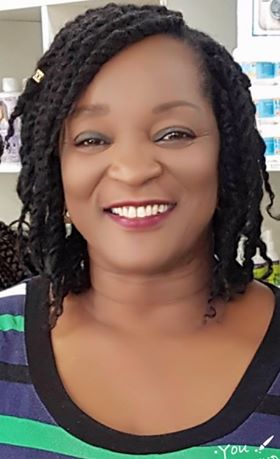
My Polio Story - Lynda Shaw
I was born in Ghana, West Africa in 1955, where at just one year old I contracted poliomyelitis. While I can recall some childhood memories of leg stretches and massages, my main recollection of treatment for my polio was an operation I had on my leg aimed at lengthening my Achilles tendon and straightening my foot.
In 1980, I migrated to Australia settling in Adelaide, soon after arriving, I was fortunate to have a second operation on my leg, as the first one I underwent as a child in Ghana had been done prematurely – before I had finished growing.

I was born in Ghana, West Africa in 1955, where at just one year old I contracted poliomyelitis.
While I can recall some childhood memories of leg stretches and massages, my main recollection of treatment for my polio was an operation I had on my leg aimed at lengthening my Achilles tendon and straightening my foot. The polio had left the tendons in my leg shorter, bringing my heel up, and causing me to walk on the ball of my foot.
In 1980, I migrated to Australia settling in Adelaide, where I married, had a family, and worked in records management at Glenside Hospital and the South Australian Ambulance Service. Soon after arriving in Australia, I was fortunate to have a second operation on my leg, as the first one I underwent as a child in Ghana had been done prematurely – before I had finished growing. By having my foot and ankle reconstructed, my heel was again in the correct position and I could walk without limping. Unfortunately, this progress was undone after a fall at a work conference, where I tripped and landed on my foot. Four months with my leg in plaster resulted in significant weakening my muscles. I now walk with a limp, and with the assistance of a walking stick for long distances.
As I’ve grown older the late effects of polio (LEoP) have begun to appear. Since the age of 58, I have experienced symptoms on my affected side, including weakness in my right leg, joint pain, issues with my right eye and shoulder, periodic falling, and even choking. I also take medication to help with pain in my left hip – as this is my ‘good’ hip which is overused and becomes painful. My polio is exacerbated by polymyalgia, diagnosed about four years ago. This increases joint pains and general lethargy.
Polio SA has been a support to me. Through Polio SA membership I was able to access hydrotherapy lunchtime group sessions at Thebarton Swimming Centre, prior to its relocation to Noarlunga. The exercises in the water, led by therapists, helped a lot through strengthening and stretching my muscles. I also find the tips in the newsletter very helpful.
I feel there is little understanding and recognition to date of the Late Effects of Polio by the wider community. I know that there are other African migrants in Adelaide who are living with the Late Effects of Polio. I’m trying to organise a meet-up so that we can share our stories and information, and encourage them to join Polio SA, to work out how we can access better support for our condition.
In African culture, discussion of any type of disability can be a bit of a taboo, even to the extent that some people have the mentality that those with any form of disability are below others. In contrast, I was brought up in a family where everyone is equal, all treated the same. Dad was a surgeon, Mum was a midwife, so they knew more about what to do to help me. I was encouraged – ‘you have two legs, two arms, you can do anything you want to, and are capable of achieving anything you set your mind to’. So, I’m attempting to reach out to other African polio survivors here in Adelaide to share information. I’m slowly getting through to the various groups, and I’m not giving up.
I feel that the medical profession needs to be educated more fully on how to help patients experiencing the Late Effects of Polio. Currently, many medical professionals are younger people, who might not have had much experience in polio patients. For example, general anaesthetic needs to be administered very carefully to people who have had polio; such patients can have adverse reactions.
Governments need to better fund support for polio survivors through organisations like Polio SA, and raise the profile of our needs. People see us in the community and know that we have a disability, but they don’t know what it’s about.
Polio SA has been helpful, and I would love the community to be more aware of the work it does. Having services like hydrotherapy offered more centrally would help more polio survivors. A discount on aids, like walking sticks and other mobility devices would be valuable.
In addition, vaccination against polio is vital, so younger generations aren’t affected. We need to be vigilant and proactive to make sure people are vaccinated to fully eradicate polio across the world.
While the Late Effects of Polio can be difficult to manage sometimes, my advice to other polio survivors in our community experiencing these symptoms in later life is: eat healthily, watch your weight, take low-impact exercise, and seek support from Polio SA. I’ve also had success with eating an alkaline diet and drinking alkaline water. Networking with other polio survivors is so valuable too, allowing us to share our experiences and knowledge to help each other.
| Categories |
| Search by year |
Are you a polio survivor?
Sharing your story can help others. If you would like to share email us.