
Mary-ann we will miss you
In December 2019, Maryann Liethof will be celebrating a big birthday milestone and entering into her retirement.
Maryann was appointed as Polio Australia’s National Program Manager in early January 2010 and she has worked tirelessly to ensure Polio Australia’s functionality and success ever since. Maryann has been a major asset to Polio Australia and will be dearly missed!

Maryann has been a major asset for Polio SA and we wish her all the best in her retirement.
In December 2019, Maryann Liethof will be celebrating a big birthday milestone and entering into her retirement.
Maryann was appointed as Polio Australia’s National Program Manager in early January 2010 and she has worked tirelessly to ensure Polio Australia’s functionality and success ever since. Maryann has been a major asset to Polio Australia and will be dearly missed!
Maryann as been paramount in her help, advice, professionalism and such huge knowledge and support to us here at Polio SA.
We all want to wish her all the very best in her upcoming retirement and thank you for such dedication to us.
Enjoy retirement much love to you Maryann.
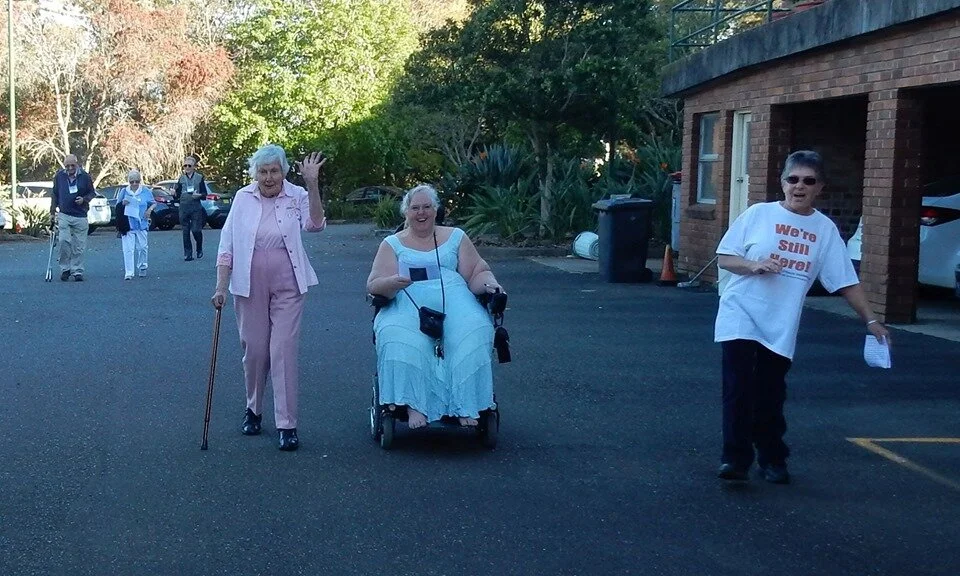
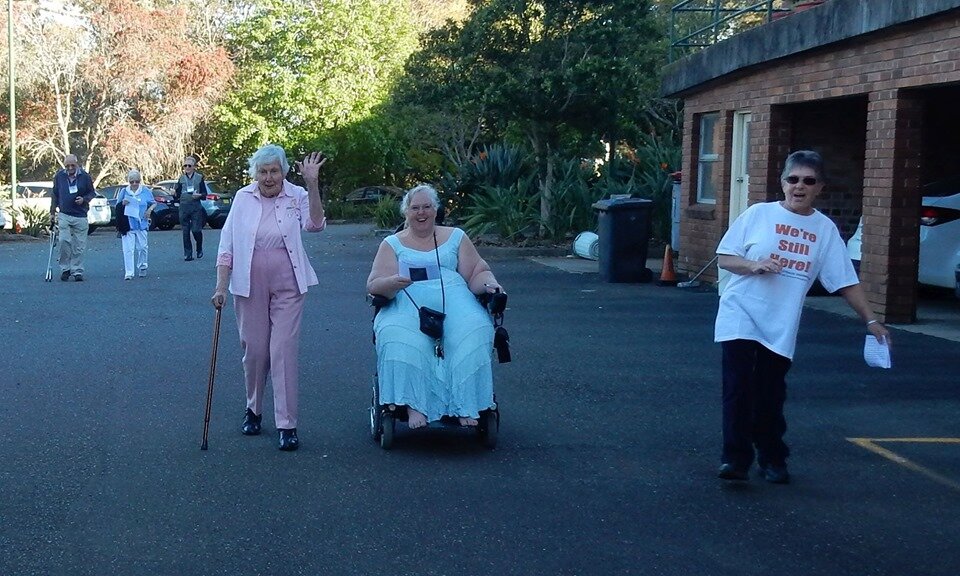
A beautiful Walk With Me to raise awareness and funds
A beautiful Walk With Me to raise awareness and funds
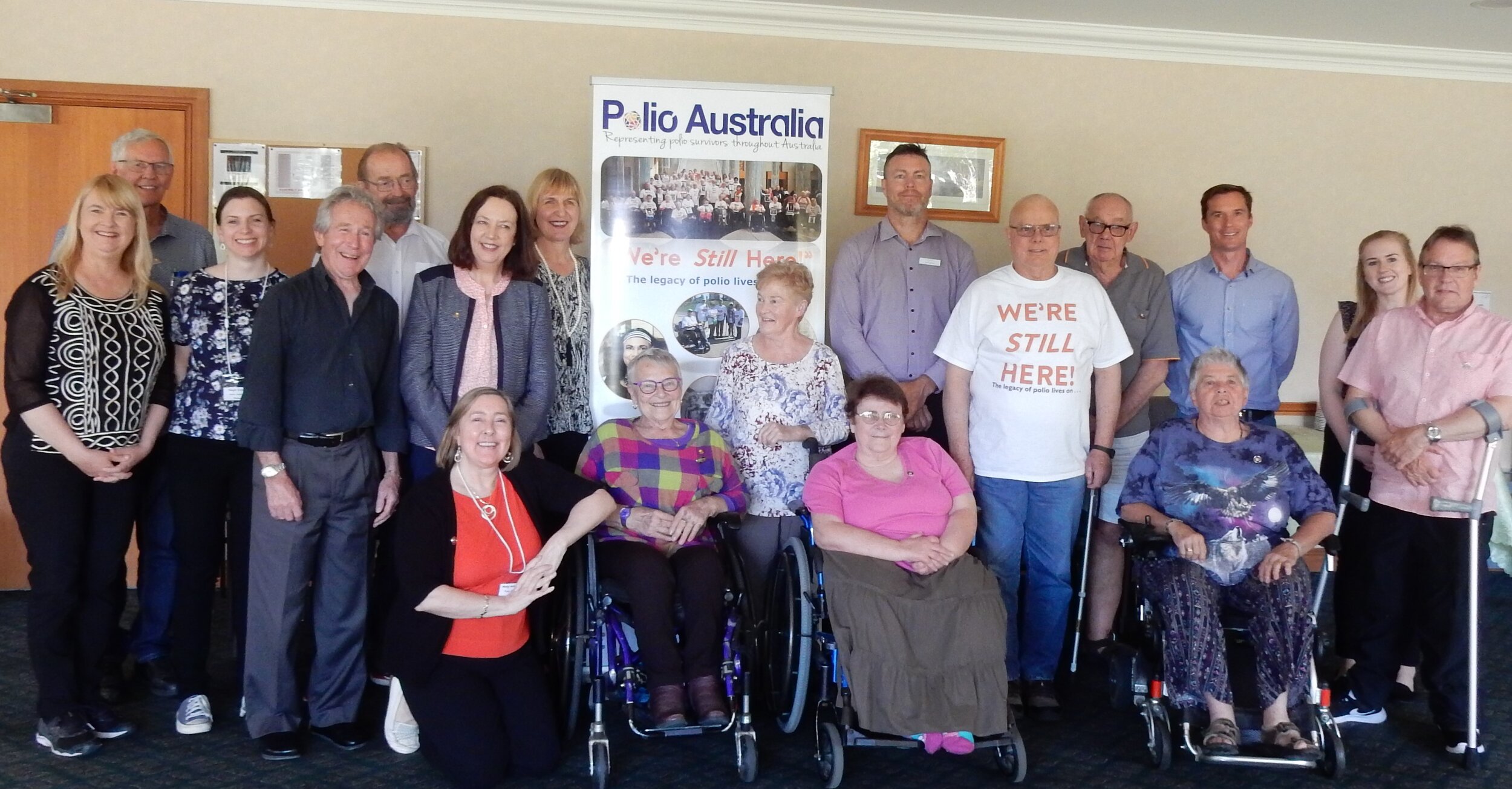
Polio survivors and supporters gathered and took a lovely morning walk/wheel around the beautiful gardens at St Joseph’s Centre for Reflective Living in Baulkham Hills, Sydney on Friday October 18.
Polio survivors and supporters gathered and took a lovely morning walk/wheel around the beautiful gardens at St Joseph’s Centre for Reflective Living in Baulkham Hills, Sydney on Friday October 18.
There are thousands of polio survivors in Australia and many are now experiencing the Late Effects of Polio and struggling to access appropriate health care and support. Our Walk with Me event aims to raise awareness about the late effects of polio, and fundraising efforts will allow us to continue to support polio survivors and provide education to health professionals.
DONATIONS: please donate below (NOTE: donations for this event will be accepted until 31 December 2019). If you would like to donate to TEAM SA. Please go to link .
https://www.polioaustralia.org.au/wwm2019-sa/

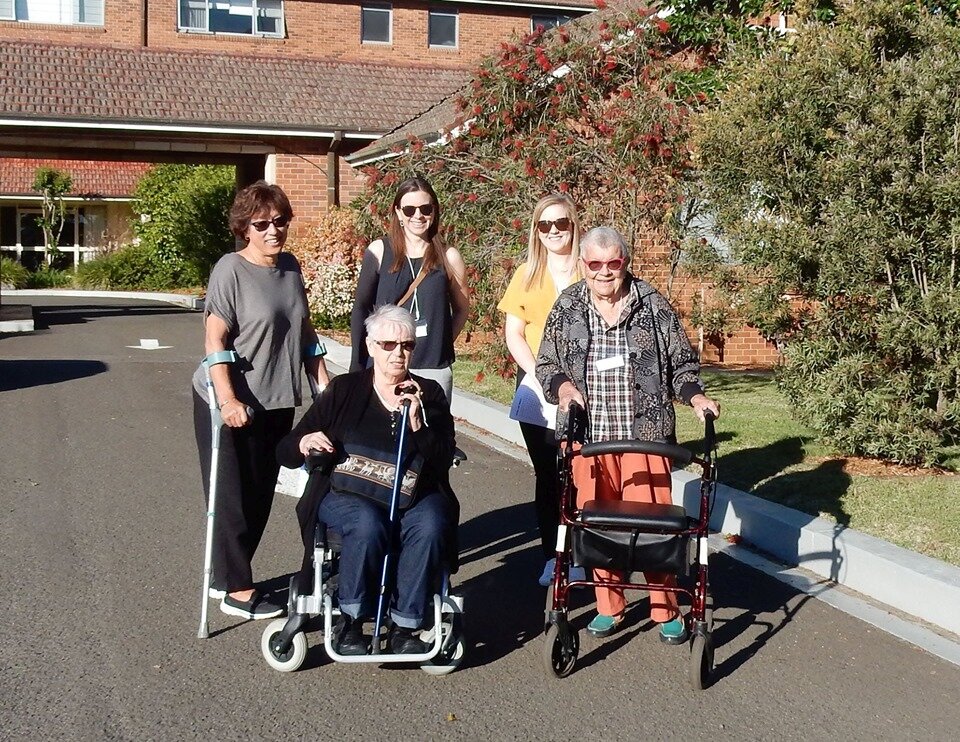
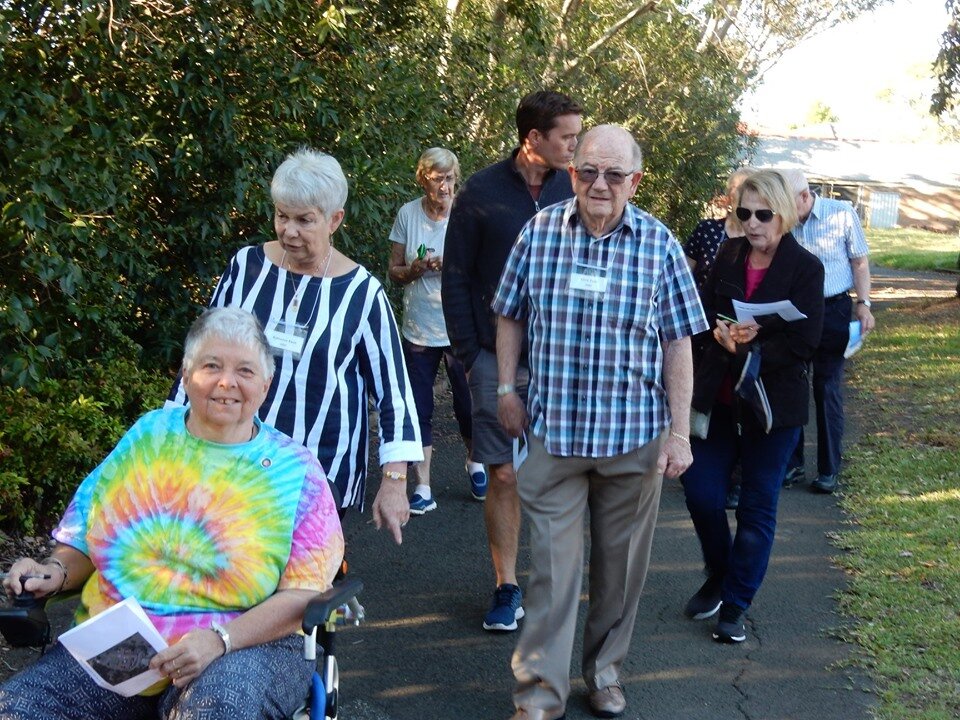
Polio Australia launches clinical advisory group for polio survivors
Polio Australia has launched a new clinical advisory group which will aim to increase the amount of support services for people living with polio's late effects and to increase the knowledge of health professionals
POLIO is largely thought to be a problem of the past in Australia, but there are thousands of survivors living with the disease's late effects who are slipping through the cracks of the health care system.
Polio Australia has launched a new clinical advisory group which will aim to increase the amount of support services for people living with polio's late effects and to increase the knowledge of health professionals.

Rachel Ingram
Polio Australia Health Promotions Officer
Health promotions officer Rachel Ingram said 400,000 Australians were diagnosed with polio before it was eradicated from Australia and thousands were living with late stage effects which include muscle weakness in new areas, pain and fatigue.
She said polio killed motor neurons, so as survivors aged, remaining motor neurons were killed off at a faster rate.
"It almost feels to many polio survivors as if their polio has come back again," she said.
"Most health professionals don't know about the late effects of polio. Most view it as a problem of the past."
The advisory group will be made up of 16 leading specialists (below) who will help Polio Australia deliver the best clinical practice research.
"We can use the expertise of these people to inform the workshops we do and improve support services and advocacy efforts."
The organisation is also preparing to launch a new blog for polio survivors which will provide up to date news and information for polio survivors.
Rachel: "The blog will keep people informed about new initiatives and activities that will be out there and will highlight various resources that will be available.
"It will also provide an opportunity for survivors to write in and share their stories."
For more information, or if you are a survivor and would like to share your story, email:
office@polioaustralia.org
or
poliosa.office@gmail.com
Clinical Advisory Group
Professor Robert Booy
Infectious Diseases Specialist
NSW, Australia
Yvonne Cohen
Speech Pathologist
VIC, Australia
Denise Currie
Coordinator, Polio Services Victoria
VIC, Australia
Ann Buchan
Neurological Physiotherapist (retired)
SA, Australia
Dr Stephen de Graaff
Rehabilitation Physician
VIC, Australia
William Levack
Associate Professor of Rehabilitation and Academic Head of the Rehabilitation Teaching and Research Unit
New Zealand
Lillian Drummond
Physiotherapist
New Zealand
Anne Duncan
Clinical Nurse Consultant
VIC, Australia
Gordon Jackman
CEO – Duncan Foundation
New Zealand
Dr Natasha Layton
Occupational Therapist
VIC, Australia
Melissa McConaghy
Neurological Physiotherapist
NSW, Australia
Dr Graham McGeoch
General Practitioner
New Zealand
Melinda Overall
Nutritionist
NSW, Australia
Dr Peter Nolan
General Physician
QLD, Australia
Dr Gareth Parry
Neurologist
New Zealand
Dr Nigel Quadros
Rehabilitation Physician
SA, Australia
Polio & chronic fatigue syndrome
The relationship between fatigue, brain stem damage and low blood pressure links
polio survivors to another bunch of fatigued folk: those with Chronic Fatigue Syndrome.
Watch your blood pressure
Q. I had polio with weakness in my left leg. I recovered and carried on a normal life until the early 1990’s when I started to have fatigue, heart palpitations, skipped beats, low blood pressure (especially after I eat) plus constipation. Should my doctor be considering a tie-in with polio?
A. Oh, yes! Fifty years ago polio pioneer Dr. David Bodian discovered that every polio survivor had some poliovirus-damage to neurons in the brain stem, the so-called “bulb”; of the brain.
When brainstem damage was severe “bulbar” polio was diagnosed whose icon, the iron lung, was needed when brain stem breathing-control neurons stopped working. But the most common symptom of “bulbar” polio was trouble swallowing, not trouble breathing. And some had severe difficulty controlling their blood pressure and heart rate, which was the leading cause of death in “bulbar” polio patients.

The brain stem neurons damaged by the poliovirus that are responsible for the above symptoms control the vagus nerve, which carries commands from the brain stem to activate muscles in your throat, esophagus, stomach and intestines and also controls your heart rate and blood pressure. But the vagus nerve is a two-way street, since it also “listens” to activity in the gut, heart rate and also your blood pressure (through stretch receptors called “baroreceptors” in your aorta and carotid arteries) and sends that information back up to the brain. Vagus damage disrupting the normal functioning of the gut may explain our 1985 Post-Polio Survey findings that swallowing difficulty, diarrhea, colitis, ulcers and constipation are as much as six times more common in polio survivors than in non-polio survivors. And the other symptoms you describe may result from poliovirus-damage to the activity of brain stem vagus neurons controlling blood pressure and heart rate. For example post-polio patients can feel exhausted after a meal. When their stomachs fill with food, the vagus is apparently over-stimulated and triggers a drop in blood pressure and heart rate, causing feelings of fatigue and sometimes palpitations. Polio survivors also have been reporting another problem: food sticking in the upper esophagus behind the breastbone. We think this is due to the vagus not stimulating esophagus muscles to move the food downward. When food gets stuck, irritation triggers a painful esophagus muscle spasm that also stimulates the vagus nerve, causing blood pressure to drop and the heart to rate to slow.
Although blood pressure drops most polio survivors don’t faint, which is consistent with our 1995 Post-Polio Survey finding that polio survivors do not faint any more frequently than those who didn’t have polio. But the 1995 Survey did find that anyone who had fainted even once in their lifetime reported significantly more daily fatigue than those who never had fainted. This suggests that damage to brain stem blood pressure control and vagus nerve neurons may be coupled to poliovirus damage to bulbar “brain activating system” neurons, which our laboratory research suggests are responsible for post-polio brain fatigue.
The relationship between fatigue, brain stem damage and low blood pressure links polio survivors to another bunch of very tired folk: those with Chronic Fatigue Syndrome. About one quarter of CFS patients have fatigue that is associated with low blood pressure or increased heart rate. Some CFS patients report fatigue when a hot shower or hot room causes blood pressure to drop, as do about one third of polio survivors. Other CFS patients have blue feet, just like our polio survivors “polio Feet” suggesting that blood pooling in the leg veins contributes to low blood pressure.
Polio survivors should have a doctor take their blood pressure and heart rate lying, sitting and -- if possible -- standing. Polio survivors who have fatigue associated with a drop in blood pressure or a slowed or racing heart need to see a cardiologist who treats low blood pressure. Compression stockings, which push blood back toward the heart, and medications that increase your blood volume or stop blood from pooling in the legs, can be helpful. If fatigue follows eating, frequent, small, higher protein meals can prevent the stomach from getting too full, stimulating the vagus nerve and dropping your blood pressure...and you.
The Encyclopedia of Polio and Post-Polio Sequelae
contains all of Dr. Richard Bruno’s articles, monographs, commentaries, videos and “Bruno Bytes”
Pelvic muscles & bladder problems
Dr. DeMayo, I have PPS. In the last few years I have experienced bladder issues. I have urine retention. On a recent CT Scan, It showed pelvic muscle atrophy. Is there a connection with Bladder problems and Polio? Were Pelvic muscles effected by the virus?
Great Question! Unfortunately, there is not a great, short answer. Nevertheless, like most good questions, there is an opportunity to use this as a learning opportunity.
First a few basics…
Dr. DeMayo, I have PPS. In the last few years I have experienced bladder issues. I have urine retention. On a recent CT Scan, It showed pelvic muscle atrophy. Is there a connection with Bladder problems and Polio? Were Pelvic muscles effected by the virus?
Great Question! Unfortunately, there is not a great, short answer. Nevertheless, like most good questions, there is an opportunity to use this as a learning opportunity.
First a few basics…
1) The first Basic Bladder issue is that bladder issues in men are far different then in women. I will discuss both men and women.
By far, the most common source of urine retention (inability to empty the bladder) is obstruction of outflow caused by the prostate in men.
PPS itself does not cause urine retention in the bladder. Having said that, one needs to be sure that retention is in fact the problem. This is usually done with an ultrasound of the bladder after a void to see if to much urine still remains. Of note, frequent urine incontinence (inability to control urine / wetting one’s self) can be either due to urine retention with “overflow” leakage OR due to a lack of resistance to flow. The latter is far more common in PPS due to weakening of the pelvic floor as discussed below. Also, incontinence is for more common in women compared to men due to multiple factors including a shorter urethra (the tube connecting the bladder to the outside), the urethra having less of a bend (especially when the pelvic floor drops), and lack of resistance of the prostate. Additionally, the bladder storage capacity in women tends to be smaller (partly due to presence of the uterus).
2) The second Basic Bladder issue is that neurological issues can have a major impact on urologic function. The bladder can become either over active or one can loose the awareness of bladder filling. Coordinated control of the bladder storage and emptying requires the interaction of muscles in the bladder wall, nerves from the bladder to the spinal cord, reflexes coordinated within the spinal cord and control from the brain (both with conscious awareness and without). Stroke, Brain Injury, Spinal Cord Injury, Multiple Sclerosis and many other neurological conditions can result in incontinence due to what is termed an “upper motor neuron bladder” William DeMayo, MD. www.papolionetwork.org March, 2019 1. Since Polio is a lower motor neuron problem, we won’t discuss these more other than to say that Polio patients are not immune from any of the above conditions so they should always be considered. Also, the normal aging process can create a “hyper reflexive bladder” that can mimic an upper motor neuron problem.
3) The Bladder Basic that is most pertinent to Polio survivors is that the pelvic floor muscles play a profound role in bladder function. Any older individual is subject to this issue but those who have restricted mobility or a prior reason to have pelvic floor weakness are certainly more at risk. “Stress Incontinence” results when a cough, a laugh or a sneeze increases the pressure in the abdomen and thereby increases pressure on the bladder. It occurs when the resistance to outflow is low and this is especially the case in women. Polio can certainly cause weakness in the pelvic floor muscles and this weakness can progress in cases of PPS. Additionally, a history of child birth, recent sedentary lifestyle and weight gain can all add to relative weakness of the pelvic floor. Weak pelvic floor muscles are directly associated with less resistance to outflow. They play an important role in supporting the bladder, directly tightening the area around the urethra as well as creating a “kinking” effect with cough, sneeze or other activity which further increases resistance.
4) The last Bladder Basic is that many times bladder management is NOT Basic. Urine infection, bladder / kidney stones, stress, physical activities, behavioral concerns and many other issues can significantly impact bladder function. As such, all significant symptoms that do not resolve, should be evaluated. Referral to a urologist should always be considered if symptoms fail to resolve with treatment by a PCP.
Additionally, some Physical Therapists specialize in Pelvic Floor therapy. They can often be found through your urologist, PM&R physician or GYN. Like any muscle, the pelvic floor can be over fatigued and so treatment of a patient with PPS should be individualized and not focused on just intensive pelvic floor strengthening. A good PT specializing in this area can often provide lots of tips to improve symptoms. An example would be an older person who repeatedly has incontinence on the way to the bathroom. By the time they realize the bladder is full they risk an accident because the act of moving from sit to stand causes a reflex spasm of the bladder and the pelvic floor is not strong enough to resist this. Thankfully, there is an opposing reflex that inhibits the bladder (briefly) after 3 strong but quick contractions of the pelvic floor (Kegel type contraction). Thus, if this person takes 10 seconds to do these 3 contractions prior to standing, they can sometimes counteract the reflex bladder activity just long enough to get to the toilet.
A full explanation of bladder management is obviously well beyond the scope of this brief article. At the same time, I hope I have provided some insight into the way some bladder issues arise and provided hope that there are solutions.
William DeMayo, MD
DeMayo’s Q&A Clinic
Summer 2019 - Newsletter
In this edition
1. From the President
2. Pelvic muscles.
3. Bladder problems
4. Maurice will never give up
5. Have you ever wondered?
6. Polio and chronic fatigue syndrome
7. Clinical advisory group for polio survivors
8. A beautiful Walk with Me
9. Notice Board
10. Just for laughs
11. Member services
From the President
Merry Christmas to All the Members of Polio SA. On behalf of the Committee I extend the Compliments of the Season to you and your Families. I must apologise for the lateness of this newsletter. This is not a reflection on the magnificent Editorial Staff, but rather a roadblock from the President. As you may be aware, I am undergoing a course of Chemotherapy and this has really affected my ability to concentrate or put thoughts together to produce a “front page”. Peter, Helen and I went to Sydney on October 16th and 17th for the AGM of the Board of Polio Australia. There were a lot of busy hours put in by the Board to get through the business at hand. Gillian Thomas has been re-elected as President. Gary Newton from Victoria is the Secretary, Alan Cameron from NSW is the Treasurer and I have been reinstalled as Vice President. One of the highlights was the awarding of “Life Fellow of Polio Australia” in recognition of outstanding service for the life of Polio Australia. The recipients were then awarded Fellow pins to wear as a badge of honour.
The awards went to Gillian Thomas, Maryann Liethof, Jill Pickering and The Hon. John Tierney AM. At the end of this year Maryann will resign from her position as National Program Manager, all polio survivors in Australia owe Maryann a huge thanks for all of her work. Polio SA has been really helped with the appointment of Helen Leach as our Community and Membership Officer. Helen has followed up on some lapsed Members, sadly some have passed or are in care, but many “old” Members have re-joined. Helen has also reached out to Culturally Diverse members of the Community, and some positive results from that work. Thank you, Helen.
To finish this letter, I must implore Members to consider volunteering some time to Polio SA. The reason for this is as I have indicated I am having Chemo and cannot commit to being President into the New Year, so a replacement will be needed as I am NOT going to continue, I would however like to be a Committee Member. Also our long serving, long suffering Secretary Trevor Jessop is also resigning and he is NOT continuing, so there are two very important vacancies in the Executive of Polio SA and if these are not filled Polio SA will NOT be able to continue.
Please consider the future of Polio SA.
Thank you.
Brett Howard, President Polio SA bihoward@bigpond.com | 0403 339 814
Spinal Life World Polio Day Webinar 24th Oct 2019
To discuss topics such as rehabilitation, wellbeing, dieting, vaccination and more.
Dr William DeMayo, a rehabilitation specialist with a special interest in post-polio, will be presenting and answering questions via video link from Abu Dhabi.
Webinar organised by Spinal Life Australia
To discuss topics such as rehabilitation, wellbeing, dieting, vaccination and more.
Dr William DeMayo, a rehabilitation specialist with a special interest in post-polio, will be presenting and answering questions via video link from Abu Dhabi.
Questions are based on
Role of Exercise
Pain in PPS
Psychology and PPS
Managing the Healthcare system
Bracing
Additional speakers include Dietitian Amy Nevin from the Spinal Injuries Unit at Princess Alexandra Hospital, Social Worker Lili van Zyl from Mater Misericordiae and Polio Eradication Advocate Susanne Rea OAM.
If you just wanted to hear Dr DeMayos broadcast fast forward to timeline 08:34 and his broadcast ends at 1:00.59.
As the whole webinar is 2 hours 55 minutes long.
Identifying and Managing the Impacts of a Post-Polio History Full lecture from Dr Stephen de Graaff (25 mins)
Dr Stephen de Graaff is the Director of Pain Services and a Senior Rehabilitation Physician at Epworth Healthcare. He is a Fellow of the Australasian Faculty of Rehabilitation Medicine, and his areas of research interest include stroke rehabilitation, spasticity management, pain management, post-polio sequelae, and Continuing Professional Development. Dr de Graaff is a Past-President of the Australasian Faculty of Rehabilitation Medicine, a faculty of the Royal Australasian College of Physicians (RACP).
Dr Stephen de Graaff, The General Practice Education Day Melbourne, 2018
Meet the Expert - Brief interviews with leading clinicians Polio Infection This Week's Expert: Dr Stephen de Graaff (Interview from 2018)
Questions:
What is the natural history of polio infection? (00:24)
What is post-polio syndrome? (02:40)
What are some less typical symptoms of post-polio? (03:55)
How common are later problems from polio? (05:25)
Polio Infection
This Week's Expert: Dr Stephen de Graaff (7 mins)
Journey of the Australian Polio Survivor - Presentation by Dr Nigel Quadros
Recent Presentation was given by Dr Nigel Quadros - Journey of the Australian Polio Survivor with details on research into Sarcopenia in aging Polio Survivor.
Sarcopenia is the degenerative loss of skeletal muscle mass, quality, and strength associated with aging
Recent Presentation at Rotary club of Strathalbyn was given by Dr Nigel Quadros - Journey of the Australian Polio Survivor with details on research into Sarcopenia in aging Polio Survivor.
Sarcopenia is the degenerative loss of skeletal muscle mass, quality, and strength associated with aging
| Categories |
| Search by year |
Are you a polio survivor?
Sharing your story can help others. If you would like to share email us.