
Australian Politicians unite to champion one last push to end polio
Global campaigns and united efforts to immunize every last child has seen polio reduced globally by 99%.
Despite this roaring success, wiping out the debilitating disease across the final smattering of nations has turned out to be the greatest challenge — demanding emergency outbreak response plans, persistent monitoring, innovation, and unprecedented partnership.
Global campaigns and united efforts to immunize every last child has seen polio reduced globally by 99%.
Despite this roaring success, wiping out the debilitating disease across the final smattering of nations has turned out to be the greatest challenge — demanding emergency outbreak response plans, persistent monitoring, innovation, and unprecedented partnership.

Walk with Me Event 2019
Last week we held our annual fundraising event "Walk With Me" - polio survivors and supporters gathered and took a lovely morning walk/wheel around the beautiful gardens at St Joseph's Centre for Reflective Living in Baulkham Hills, Sydney.It is not too late to donate to our team/s: www.polioaustralia.org.au/walk-with-me-2019
Last week we held our annual fundraising event "Walk With Me" - polio survivors and supporters gathered and took a lovely morning walk/wheel around the beautiful gardens at St Joseph's Centre for Reflective Living in Baulkham Hills, Sydney.
It is not too late to donate to our team/s: www.polioaustralia.org.au/walk-with-me-2019

Polio Day 2019 celebrated in Warrnambool in first for region
Polio survivor Alice Shirreff hasn't let her diagnosis stop her from dancing her way through life.
She was diagnosed in 1949 when she was just four years old and was virtually paralyzed. By the time she was 17, she had undergone multiple surgeries and hospital visits, including a triple ankle fuse on both legs.
The result was devastating for the aspiring dancer.
Polio survivor Alice Shirreff hasn't let her diagnosis stop her from dancing her way through life.She was diagnosed in 1949 when she was just four years old and was virtually paralysed. By the time she was 17 she had undergone multiple surgeries and hospital visits, including a triple ankle fuse on both legs.
The result was devastating for the aspiring dancer.
Dennis Johnson - My Polio Story
I contracted polio in 1947, aged 2 ½ years. I lived with my family of 6 in the village of Lorton in the Lake District of England. Apparently, the symptoms presented themselves one Sunday afternoon when we were out walking, and I suddenly fell to the ground without any warning. Attempts to get me to stand failed and after advice from our doctor, I was initially admitted to the hospital in Carlisle and after a few days was subsequently transferred to the infectious diseases’ hospital near Lake Windermere.
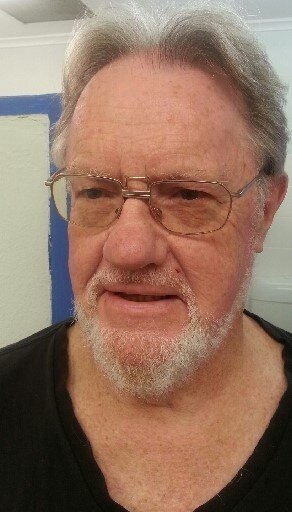
I contracted polio in 1947, aged 2 ½ years. I lived with my family of 6 in the village of Lorton in the Lake District of England. Apparently, the symptoms presented themselves one Sunday afternoon when we were out walking, and I suddenly fell to the ground without any warning. Attempts to get me to stand failed and after advice from our doctor, I was initially admitted to the hospital in Carlisle and after a few days was subsequently transferred to the infectious diseases’ hospital near Lake Windermere.
The location of the hospital was the most peaceful and encouraging environment for treatment and recuperation possible, with the vast lake clearly visible across the natural countryside. I had the opportunity to revisit the site only last year, being able to walk through the actual room in which I had been housed. (the whole complex is now a retirement village)
I was fortunate to receive the treatment promoted by Australia’s Sister Kenny, who strongly advocated the use of ‘hydrotherapy’ by placing us in shallow salt baths and encouraging us to kick and splash vigorously – something which 2-3-year olds were more than happy to do. Her treatment was in contrast to the accepted practice of the time, which was to put the affected limbs in irons, so the fact that I was able to pursue the more active life I later enjoyed was directly attributable to Sister Kenny’s treatment regime.
I was a patient there for several months during which time no contact was allowed with my family, though I believe my parents were able to come and ‘see’ me from a distance – without my knowledge. My parents relied totally on public transport, and in 1947 that was rather sparse, especially in rural Cumbria, so I can’t imagine how difficult the journeys would have been.
When the time came for my discharge, the perceived wisdom of the time being that I was cured, I was reluctant to go home….the staff of the hospital had become my ‘family’ so it was amid floods of tears that I went home with these ‘strangers’. My parents were advised to get me a tricycle and to encourage me to ride as much as possible. The prognosis of complete cure seemed to be vindicated, as I was able to take part in all the normal activities of a growing child. All that was conspicuous that I kicked with my left foot (otherwise right-handed). Consequently, my left leg developed to ‘iron man’ proportions! It seemed that only my lower legs had been affected... so from the knees up, everything worked as normal.
Unrelated to the polio was the fact that I became very obese during my teenage years but dealt with it by following a rigorous gym routine, which was not inhibited in the least by my bout of polio. I was then able to play cricket and squash (as if the world depended on it!) without any restriction… other than my lack of talent.
In my late teens I took up drum lessons and found that I could not lift my feet on the drum pedals to the extent other students were able to. I thought nothing of it as it was nothing more than a minor irritation. Everything continued without let or hindrance, until at some point in the 1980’s I noticed that I was automatically using my hands to help me stand up from a chair and when walking down stairs, my right heel would ’slap’ on the step unless I quite consciously controlled it. As time passed, I noticed that my left calf muscle was diminishing, and it was about then that the ‘Post-Polio Syndrome’ was identified world-wide. Since then my physical mobility has declined very very gradually without curtailing any of my activities to any great degree… until recently. I became aware a few years ago that I could no longer run or squat and more recently walking on uneven or sloping ground and climbing stairs has become almost impossible without some form of assistance ( so far a hand rail and staring at the ground is all that is needed ! )
I have been involved in Polio SA’s hydrotherapy programme for the last couple of years and have found the activity and the moral support a great encouragement in sustaining a positive attitude and a sense that it is possible to slow the deterioration. A two-week live-in assessment at Griffith Private Hospital proved to be most useful in the advice and activities available, reinforcing the assistance already rendered by Polio SA.
Dennis Johnson – Polio SA Member
Maurice Sorenson - My Polio Story
I am 73 years of age and still remember like it was yesterday the day my mum and dad took me to The Adelaide Children’s Hospital.
Looking up at the counter, holding on with my left arm, standing on my right leg, telling them I was ok.
Only to be diagnosed later with Polio in my spine, right arm, and left leg. I was 4 and a half years old, yes, I was vaccinated and soon to go to school. The next few months were spent in there and I will always be grateful and thankful for the love and care of my parents and everything the nurses and staff of the Children’s Hospital did for me.

I am 73 years of age and still remember like it was yesterday the day my mum and dad took me to the Adelaide Children’s Hospital.
Looking up at the counter, holding on with my left arm, standing on my right leg, telling them I was ok.
Only to be diagnosed later with Polio in my spine, right arm, and left leg. I was 4 and a half years old, I was soon to go to school. The next few months were spent in there and I will always be grateful and thankful for the love and care of my parents and everything the nurses and staff of the Children’s Hospital did for me.
A solid hardboard bed was waiting for me at home. Twice a week trip back and forth to the Children’s Hospital in the kangaroo ambulance for physio for the next year. Mum and Dad used to wheel me up and down Norwood Parade on a loaned hospital wheeled bed for outings with my younger brother Des hitching a ride down the bottom by my feet.
I started school a year later only to be at school for a few months and caught diphtheria from an inter-state girl, who took the chair next to me, I was saving for my cousin Valda due to start school soon too.
I then spent months in Northfield infection hospital. It was a horrible place for me as a child. My wife and I wheeled my brother in law around there in recent years. He was in Hampstead Rehab for cancer may he rest in peace.
I looked through the old derelict building’s dirty windows only to see exactly what I remembered so many years ago. White plastic covered mattresses and black and white striped covered pillows, bad memories and nightmares. I celebrated the day that building was demolished and lay in rubble on the ground.
I was fortunate to be able to recover enough and enjoy a relatively normal average and simple life in sport and work. I completed a fitting and turning apprenticeship, worked with the last company for 40 years, retired at 68 because of physical health.
I built a tee bucket hot-rod from the ground up that was used for hot-rod tours for 4 years. In 1982 I was very fit running 5.6k one lunch hour and 2.8 k the next with 2 other guys. One was a world marathon runner, of course, I could never keep up anyway. Halfway out on our long run one day I felt I had run out of energy like my whole body was sprained. I walked back to work. I hid my problems from all but my immediate boss at work, who I was grateful for his help and understanding and I didn’t lose any time from work except for treatment. I went to one of the top physios who said my leg was wasting away and put weights on it for exercise to build it up, but that made it worse. It was not making sense to me and felt more like fatigue. Shouldn’t be happening, rest, conserve energy and warm pool water helped. Looking for answers I came across a lady called Jan Holden (who I would like to contact again). A physio who had polio and caused her retirement. She was a very special lady and already in the process of looking into a possible later effect of polio. She took her cause and appeared with Ray Martin’s national tv current affair’s program to highlight it.
In 1985 I attended the first convened meeting for polio sufferers and survivors that Jan organised or helped organise at the Queen Elizabeth Hospital and I saw Dr. Lee when he was on Blacks Road, Gilles Plains. He was very helpful and caring. I was still in denial at that stage and individually went about trying to recover myself best I could. Years later I joined Post-Polio SA, can I thank Brett Howard especially for his decade of caring help, committee people and anyone else associated with Polio SA for their help and kind assistance and massage vouchers. Lee and Margot in hydrotherapy also for their patience, help, and understanding. I know my posture is of concern to me to and I do try, and for the odd Impromptu swimming stroke help to help me. It might not look it, but I am trying my best.
I haven’t had a reply from my latest survey or understood why most of my body is affected in some way but it’s because it’s in my spine. It’s odd but my right leg is worse now and severe restricted movement in back, shoulders, neck and arms and muscle fatigue. I have x-rays showing excess muscle effort pulling ligament off the bone. Warm water hydrotherapy, massage and carers care help a lot. I have to be careful I can enthusiastically try to do in the water what I have never been able to do. I hurt myself, learn, recover but never give up. I am so grateful to my parents, children’s hospital, guys and gals like Brett, Lee & Margot and others and still feel I am one of the lucky ones. Thank you so much.
My story is only a simple one, on a journey many others like us are on and still learning to cope with.
Find out what motivates you, use it and be happy doing your best.
Polio Awareness Month & Walk With Me
Polio Awareness Month October - World Polio Day 24th October 2019
As October is Polio Awareness Month, I'm getting in touch to update everyone on a few things.
This month is all about raising awareness of Polio, and reminding the world that as Post-Polio people, 'we're still here!' If you haven't already registered, you can help advocacy efforts for all post-polio people in Australia by joining the
Australian Polio Register.
If you have a Facebook account, don't forget to follow Polio SA on Facebook for updates during Polio Awareness month.
World Polio Day 2019 we have been sent an invite from Spinal Life Australia based in Qld to a video link that will be transmitted on the 25th October.
Dr William De Mayo will be answering questions in regard to late effects of polio and there is an email address to send in any questions you may have and to be included in the video link. Reply to jkretschmann@spinal.com.au rsvp by 18th October. click here for more details.
Also, we have kindly received from one of our members an opportunity to join a rotary event where Dr. Nigel Quadros is a guest speaker. Strathalbyn Rotary Club at Strathalbyn Football Clubrooms, Ashbourne Road Strathalbyn & will commence at 6.30 pm for a 7 pm start on the 29th of October 2019. The Cost will be $25 per head which includes a meal.
Email to secretary@strathrotary.org.au if you would like to attend
29 October - Dr Nigel Quadros – Polio Australia
Dr Nigel Quadros is a Fellow of the Australasian Faculty of Rehabilitation Medicine (RACP) and works as a Senior Rehabilitation Medicine Physician in Central Adelaide Local Health Network which is affiliated with the Queen Elizabeth Hospital, the Royal Adelaide hospital, and Hampstead Rehabilitation Centre. He is also a Senior Clinical Lecturer in the Faculty of Health and Medical Sciences at the University of Adelaide where he is involved in both undergraduate and postgraduate medical teaching. His clinical interests are mainly in stroke and general neurological rehabilitation. His special interest is in the assessment and management of people with late effects of polio and he has been conducting a medical post-polio clinic at Queen Elizabeth hospital since 2005. His research area currently involves studying the functional decline in aging polio survivors.
Finally, we will be attending the AGM of Polio Australia and taking part in the walk with me event.
“Walk With Me” event aims to raise awareness about the LEoP and fundraising efforts will allow us to continue to support polio survivors and provide education to health professionals. Here is the link below if anyone would like to donate to TEAM SA. Thankyou.
https://www.polioaustralia.org.au/wwm2019-sa/
for more details on the event
https://www.polioaustralia.org.au/walk-with-me-2019/
Brett Howard, President, Polio SA
bihoward@bigpond.com | 0403 339 814
The Australian Polio Register
Whilst we know you have registered with Polio SA, we would like to take this opportunity during polio awareness month to remind our members to complete the Australian Polio Register.
The Australian Polio Register was established by Polio Australia in October 2010 to gather information on the numbers of polio survivors living in Australia today, whether or not they contracted polio in this country.
There are currently over 3,000 people on the register, but it is estimated that over 400,000 Australian's survived the deadly virus last century, so it is important to check if you are registered, as the larger the register the louder we can remind people that "We're Still Here".
Register today
Check to see if you have already registered
Beyond Calamity - Esther's Book Details
My Journey from Disability and Disaster — to Possibility and Empowerment
From writing sums in the dirt with her finger at a poor village school in South Sudan, Esther Simbi rises above disability to become a Social Worker and Disability and Human Rights advocate in Australia. Giving voice to the voiceless is her passion. She believes that disability is not inability, age is just a number, and ‘refugee’ is just a label.
From polio at age four, through nineteen years in refugee camps in Uganda, Esther’s stories of life in South Sudan and as a refugee will move, shock and inspire you
Esther Simbi is living proof that disability and disadvantage need not define us. She has overcome incredible odds: losing health, family, home, and community; surviving rape; and living as a refugee for nineteen years. She was the first African woman from a refugee background to run for parliament in South Australia, where she represented people with disabilities. Education, she believes, is the key to empowerment, and she works tirelessly to empower those who do not have a voice, or have not yet found their voice, to lessen inequality and disadvantage.

Vivid Publishing
ACN 124 367 086
ABN 91516 588 690
To Purchase Esther’s Book go to link below
http://www.vividpublishing.com.au/beyondcalamity/
PAPERBACK EDITION
$21.95 + $8.50 P&P.
Australian delivery
Esther’s book is also available on Amazon and on Booktopia. Online reviews on Amazon, Booktopia and on Goodreads.
Esther Simbi - My Polio Story
I am the youngest of six children and I am from the South Sudanese Kuku community. I speak the Kuku language and English. A few weeks after settling in my mother’s village Lomura, I contracted poliomyelitis. One morning in Lomura Village South Sudan, I woke up with a high fever and a body paralysed from neck to toe. I was not able to stand or sit up. My mother gave me a medicine made from local herbs, and she invented her own form of physiotherapy treatment where she massaged my body in cold water every morning.

Esther Simbi and Helen Leach at Esther’s Book Launch 2019.
I was born in Kajo-Keji South Sudan to a peasant family. I don’t know what year I was born. It was a home birth in the village with no birth certificate, so my mother didn’t remember the year I was born. The year of birth in my visa to Australia is 1977. I don’t look or feel 41 years old, so I calculated and guessed my age to a more realistic age which is 37 years. Unfortunately, I have not been able to change my age to the more realistic one here in Australia because I don’t have a Birth certificate to prove my age. If I was four when I contracted poliomyelitis, then I am 37 years old now but not 41. My father was a primary school teacher in 'Beliyak Primary School in Kajo-Keji South Sudan, and he also worked as a cleaner in Mundari Hospital in Kajo-Keji South Sudan. My mother didn’t have the opportunity to pursue education due to the South Sudanese cultural practices where women are trained to be housewives, mothers and family/community carers. My parents were divorce when I was four years old and my mother went to live with her relatives in a village called Lomura leaving me and my siblings with my father. In the South Sudanese culture, children belong to their father. In any case of marriage, relationship or family breakdown the woman will leave without her children and that was what my mother did. A few months later, my three sisters and I were reunited with our mother after our father took ill and was unable to look after us. I am the youngest of six children and I am from the South Sudanese Kuku community. I speak the Kuku language and English. A few weeks after settling in my mother’s village Lomura, I contracted poliomyelitis. One morning in Lomura Village South Sudan, I woke up with a high fever and a body paralysed from neck to toe. I was not able to stand or sit up. My mother gave me a medicine made from local herbs, and she invented her own form of physiotherapy treatment where she massaged my body in cold water every morning. She also tied my hands to two poles to support me, and she left me to stand there for an hour every morning and evening for two to three months. I had to learn to sit and to walk again, and I eventually regained strength in my upper body. Thanks to my mother, who worked tirelessly, I was able to walk again, though with great difficulty.
There was no immunisation available in South Sudan when I was born to immunise children against polio. I was left with a weak lower back, a deformed and painful right foot, and a very weak left leg. My left leg is 2 inches shorter than my right leg which makes balancing difficult when walking. I bend forward when walking, putting a lot of strain and pain on my lower back. I now suffer from post-polio syndrome, which is associated with headaches, muscle, bone and joint pain, fatigue, and general body exhaustion. I limp and have a lot of falls causing injuries. In December 2015 when I was pregnant with my now 3-year-old daughter, I had a fall and fractured my left ankle. Wearing a plaster for 6 weeks meant that I had to learn to walk again as the plaster had weakened my left leg muscles even more. I am on a waiting list for surgery to fix my right knee. I am on medication to manage the pain in my right knee. I use a wheelchair outside of the house to access the community. I try not to use the wheelchair much to keep my muscles strong and active. I use my left arm to push my left knee back when I am walking for balance to aid my mobility. I have damaged my left elbow because of the way I walk and now I am waiting for surgery to fix my elbow. When I was young, my legs muscles were stronger and I was able to walk for 10 to 15 minutes without resting but after I turned 25 years old here in Australia, my muscles started to weaken. Now I cannot walk for five minutes without resting and falling. My sight in my left eye is weaker than the sight in my right eye. I also choke while swallowing. I now see a speech pathologist funded by NDIS to manage my swallowing. I was diagnosed with late effects of polio called Post-Polio Syndrome here in Australia 13 years ago.
In 1987, my family and I fled the Sudan civil war and resettled in Uganda where I grew up in three different refugee camps for 19 years before migrating to Australia. I migrated to Australia in July 2005 as a refugee where I completed a bachelor’s degree in social work in 2007 and a master’s degree in Mediation and Conflict Resolution in 2014 at the University of South Australia. I am a single mother of two beautiful daughters aged 8 and 3 years old. I worked with Families SA and Disability SA from December 2007 to July 2013 as a social worker, Case Manager, Service Coordinator, Intake Coordinator and as a Facilitator. I was also the Founder of, and the Coordinator for, the Crossing the Bridge Project in 2014 which was aimed at supporting African Women with Disabilities in South Australia, and supporting mothers of African children with disabilities as wells wives and female family members of African men with disabilities in South Australia. I ran for Parliament with Dignity Party SA (formerly known as Dignity for Disability) in the Upper House as a Lead candidate for the South Australia’s State Election in 2014 and I was also on the Dignity Party’s Upper House ticket for the 2018 South Australia’s State Election, representing people with disabilities in South Australia. I was the first African Woman from a refugee background to run for Parliament in Australia.
In March 2019, I published my first book Beyond Calamity which is the story of my life journey, contracting polio in South Sudan as a 4 year old girl and surviving that, growing up in 3 different refugee camps in Uganda, growing up and overcoming challenges as a girl and as a woman with a disability in the South Sudanese Community, migrating to Australia as a refugee 14 years ago and overcoming challenges on a daily basis as a single mother and as a woman with a disability. My book is available on the publisher’s website Vividpublishing.com.au/beyondcalamity and it’s $30.
After reading Esther’s Book if you could leave an online review it would be appreciated.
Should Polio Survivors do Exercise for Strengthening?
Question:
In January I shovelled snow and my left leg became very weak. My knee buckled twice but I caught myself before I fell. I went to my doctor and he sent me right to physical therapy. In the first session I was on the treadmill for 10 minutes, on the bike for 5 and I did straight leg raises with weights around my ankles. I barely made it home, where I fell to the kitchen floor. My legs are even weaker now and they are always burning. Don’t polio survivors need exercise to make weak muscles stronger?
Question:
In January I shovelled snow and my left leg became very weak. My knee buckled twice but I caught myself before I fell. I went to my doctor and he sent me right to physical therapy. In the first session I was on the treadmill for 10 minutes, on the bike for 5 and I did straight leg raises with weights around my ankles. I barely made it home, where I fell to the kitchen floor. My legs are even weaker now and they are always burning. Don’t polio survivors need exercise to make weak muscles stronger?
Dr. Bruno’s Response:
Your body is answering that question for you, but let me tell you about the research regarding exercise and polio survivors. There have only been about half a dozen small studies that tested around 12 subjects each. And although 90% of the subjects were said to have “Post-Polio Syndrome” or reported new muscle weakness, their legs were much stronger than yours. Subjects were able to ride a bike for 5 minutes and then do straight leg raises multiple times with a weight attached to the ankles 2 to 4 times a week for from six weeks to two years -- something you couldn’t do one time.
The studies tested polio survivors’ ability to strengthen their quadriceps muscle, the muscle in the front of your upper leg that allows you to kick your lower leg up while you’re sitting and to “lock” your knee when you're standing. The quadriceps is the muscle that gave out when you fell in the kitchen. The studies differed in the way exercises were performed. Two studies asked polio survivors to limit the number of leg lifts if they felt fatigue, told them to rest between bouts of exercise and increased the amount of weight lifted only if there was no “excessive fatigue.” Other studies described their exercise regime as “high-intensity,” “heavy resistance,” or “aggressive.”
Two studies required polio survivors do five minutes on an exercise bicycle before they did as many as 30 leg lifts three times each week. In the most aggressive study polio survivors did five minutes on the bicycle followed by a 60 minute exercise class twice a week for 5 months! A polio survivor who is able to do that kind of exercise clearly does not have PPS! The subjects in the studies had more strength, more endurance, more ability to function and fewer symptoms than you do or do the patients we treat at The Post-Polio Institute. Still, when you read the researchers’ conclusions it sounds like exercises is just the thing to restore muscle strength in polio survivors with PPS. Said one article, “…a supervised training program can lead to significant gains in strength.” Unfortunately, when you look at the study’s actual data, the benefits of exercise are far from clear. Only 53% of those who exercised had an increase in leg muscle strength of about 26%. About one quarter of the subjects had no change in strength while 21% had a decrease in strength of about 10%. So, more often than not, exercise either had no effect or actually decreased muscle strength. But there’s more. Well, actually less.
Only three studies asked whether exercise had an impact on polio survivors’ ability to function in their daily lives. In one study where exercise was limited by fatigue, there was no measurable change in muscle strength over 2 years, although half of the subjects thought their walking and stair climbing had improved. In one aggressive study there was a Should Polio Survivor’s Exercise for Strengthening ? A Bruno Byte © www.papolionetwork.org 2016 2 29% muscle strength increase, no improvement in subjects’ ability to do their daily activities, but an increase in muscle fatigue of from 150% to 300%! Muscle fatigue also increased by 21% in another aggressive study in which strength increased by 36%.
You have to ask what good comes from any small increases in muscle strength that are not related to improved functional ability but are related to muscle fatigue that increases more than strength does. Dr. Alan McComas’ performed a study showing that polio survivors who were not treating their muscle weakness and were getting weaker lost 7% of their motor neurons each year. McComas concluded that “polio survivors should not engage in fatiguing exercise or activities that further stress metabolically damaged neurons that are already overworking.” Muscles weakness is a sign of neurons failing and dying. Polio survivors were taught to “use it or lose it” and to exercise until you “feel the burn.” When you feel the burn you are burning out your neurons. The Bottom Line: Should you do exercise to strengthen newly weakened muscles? No!
A Bruno Byte
from
Richard L. Bruno, HD, PhD
Director,
International Centre for Polio Education
Bracing for Polio Survivors
Question: The knee on my polio leg kept bending further backward over the years. I was told to get a brace but didn't want one until I absolutely had to have it. After a while my knee hurt so much I’ve finally got a brace. But my knee bends so far back now that the brace bites into my skin and is so painful I can't wear it. Even if I could wear the brace, it is so heavy I can't lift my leg. What can I do?
Question: The knee on my polio leg kept bending further backward over the years. I was told to get a brace but didn't want one until I absolutely had to have it. After a while my knee hurt so much I’ve finally got a brace. But my knee bends so far back now that the brace bites into my skin and is so painful I can't wear it. Even if I could wear the brace, it is so heavy I can't lift my leg. What can I do?
Dr. Bruno’s Response: Unfortunately, it's too late for a brace to help. Braces are designed to support a weak leg, not to fix mechanical problems like recurvatum ("back knee"). We have seen many braces that hurt too much to wear because they were intended to "fix" recurvatum or to straighten a foot that has turned outward for 40 years. All braces should be designed to fit your leg just as it is, not to make it look the way other peoples' legs do, which leads to a Post-Polio Precept: never brace to fix a deformity!
Many polio survivors have come to The Post-Polio Institute with braces that are unusable because they are too heavy, made with the 1940's vintage steel, aluminium metal uprights, contain way too much plastic or have ankle joints. The Post-Polio Institute patients do very well with the new lightweight braces that use plastic moulded to the shape of your foot and leg to replace the metal uprights.
The most common brace worn by polio survivors is the short leg brace, the moulded anklefoot orthosis (MAFO). It is made of a relatively thin plastic that slips into your shoe and goes up the back or front of your lower leg to stop foot drop, give a spring to your step if you have weak calf muscles, and even support a weakened thigh muscle to help prevent the knee from buckling. The brace you were prescribed, the long leg brace or knee-ankle-foot orthosis (KAFO), usually replaces the metal uprights with moulded plastic that slips into your shoe, goes up the back of your lower leg and is attached to a plastic cuff behind your thigh with a metal hinge and lock at the knee. Uprights can be used in place of plastic but are now made of graphite -- a super-strong, ultralightweight but very expensive composite material used in airplanes -- if you need extra support or if your leg twists too much to be comfortable in a moulded brace. There are now two types of KAFO knee joints: the old, familiar joint with drop-locks (“Bale” locks) or a spring-loaded latch that prevents the knee from bending when you stand and walk. A newer development, the offset joint, can be used by those who have some strength in their quadriceps and whose knees bend backward at least a little. The offset joint doesn't lock, but it still prevents the knee from bending when your leg is straight. With the offset joint you can swing your leg normally when you walk but be secure when you're standing.
However, polio survivors should avoid ankle joints, be they plastic or metal, which prevent your foot from dropping but allow your ankle to bend upward. Hinged ankles add weight to the brace, take away support for weakened thigh muscles and prevent the brace from helping your leg to spring forward. I'm sorry a brace can't help you. We have unsuccessfully tried to brace other polio survivors with severe recurvatum.
They, too, couldn't wear a KAFO because it hurt too much. Instead, they needed to use crutches or a wheelchair, which raises two important points: waiting until you’re ready" or until Bracing A Bruno Byte © www.papolionetwork.org 2018 you "have to" before using an assistive device is waiting too long; and, even if you are willing and able to use a brace, you will also need to use a cane or crutches. How do you know which to use? The rule of thumb is: if you use a MAFO, you also need a cane; if you use a KAFO, you need two forearm crutches.
If you have a brace on one leg, a cane in the hand on the opposite side shifts your weight away from the weaker, braced leg. Using two forearm crutches with a KAFO takes the load off your stronger leg as well as overused hip and lower back muscles on both sides. But there's problem. Canes and crutches put a strain on your hands, arms and shoulders and can cause carpal tunnel syndrome and upper body pain and muscle weakness. How do you save your arms? By using a wheelchair, especially outside the house.
To walk is painful, to roll divine.
A Bruno Byte
from
Dr. Richard L. Bruno, HD, PhD
Director, International Centre for Polio Education.
| Categories |
| Search by year |
Are you a polio survivor?
Sharing your story can help others. If you would like to share email us.