
Rod Muller - My Polio Story
I contracted polio at the age of 6 in 1956 and was affected from my hips down to my feet. Thankfully I did not have to go through the rigours of an Iron lung or leg irons and after a few months and lots of physiotherapy, went back to school and got on with life and really never gave it another thought.
Back in the early 1980s my Mum said to me one day have you heard that they are discovering people from back in the 40’s and 50, s were being diagnosed with Post-Polio Syndrome my comment was well it looks like I dodged that bullet
Rod Muller - My Polio Story
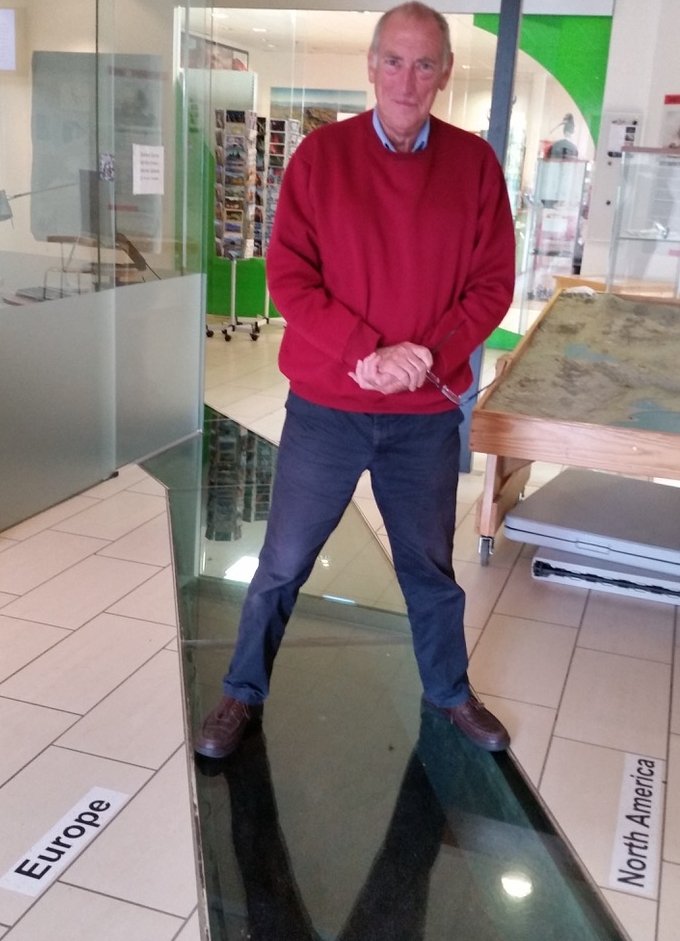
I contracted polio at the age of 6 in 1956 and was affected from my hips down to my feet.
Thankfully I did not have to go through the rigours of an Iron lung or leg irons and after a few months and lots of physiotherapy, went back to school and got on with life and really never gave it another thought.
Back in the early 1980s my Mum said to me one day have you heard that they are discovering people from back in the 40’s and 50, s were being diagnosed with Post-Polio Syndrome my comment was well it looks like I dodged that bullet.
Turn the clock forward to 2019 and I had to go for a simple sinus operation at the Stirling hospital, on my nose and when I woke up next morning stepped out of bed to go to the loo before breakfast and found myself a bit legless and thought to myself whoa this is a bit different this has never happened before. Hope it is not a Hydrocephalus problem. Yes, I suffer with it. I went home and over a period of a few weeks it got a bit better but then it didn’t I was suffering from lots of funny stuff going on in the lower part of my body so harked back to what my Mum had said. So, I went to see my doctor sat down in her office and asked the question what do you know about Post-Polio Syndrome, reply I know some people who attend our clinic who had polio but personally I know very little about it.
So, the next step was go and talk to my mate John Willoughby who was the Neurology professor at Flinders Uni for many years and after a fairly long chat he said yes, I am pretty sure you have PPS.
I contacted the Polio Australia people in Adelaide and was given the name of Nigel Quadros who was the go-to person in Adelaide to have a proper check-up, down at the Queen Liz Hospital and sure enough on consulting him he said yes you have classic PPS and told me a bunch of things I should pursue. It involved some major changes the first one being the fact I was told to halve my duty cycle which entailed slowing down from running my life at 100 kilometres an hour to 50 KPH in pretty much all categories because as time passes, I will begin to suffer more and more from a number of related issues. The first one being an increase in my fatigue levels
The degrading of my muscles and nervous system that had been attacked by the polio virus things I pick up day to day will appear to get heavier as time progresses. Things to be aware of Karma Rub (a life saver) and Magnesium Muscle eze. I suffer bad cramps, numbness and tingling that can happen anytime mainly in my feet. An increase relating to aches and pains in random places in the lower part of my body. An increase in my stress levels across the board. I am certainly weaker than what I was 3 years ago have installed 3 electric cranes to aid in any heavy lifting and I split my firewood into smaller chunks with a hydraulic splitter and I rely on other people to help me more often.
I was told a number of things I could do to help myself get on top of some of the degradation and reduce my rate of decline was to :-
Eat well not junk food and consume a minimum of 100 grams of good quality protein every day
Have access to a heated hydrotherapy pool…. so, I built one.
Find a good massage person
Find a good Physio person
Don’t let yourself get cold
Buy a copy of the Post-Polio Paradox book https://www.dymocks.com.au/book/the-polio-paradox-by-richard-l-bruno-and-richard-l-bruno-9780446690690.

https://www.youtube.com/watch?v=fykVp0ryy3U&t=10s
Proper exercises relating to my afflicted areas but in a very measured way so as not to exacerbate the polio
Rest more when feeling tired i.e., pull up a chair and sit down for a bit and know when to call it a day.
Become aware of your spatial position at all times so if you have to grab hold of something or you need to bounce off a wall or just plain lean on something for a moment. Don’t let yourself get cold, Increase my sleep and relaxation time. Be very aware of anaesthetics carry your card
Thank you Rod for sharing your story
Anne Weddle - My Polio Story
From a tutu, to the library, MI5 and Adelaide. Anne’s classical story of determination
From a tutu, to the library, MI5 and Adelaide. Anne’s classical story of determination
I contracted polio during the epidemic in the UK in 1952 when I was 19. At the time I was at classical ballet school in London preparing for my final exams. My symptoms were severe back pain and stiffness in my legs so, no more dance classes.
After a few weeks of not knowing what ailed me, I went to see a specialist in my home city of Oxford. It was he who diagnosed Polio and arranged for me to go into hospital.
I spent about two months at the Wingfield Orthopaedic Hospital in Oxford receiving treatment in the way of swimming (being lowered into the pool and raised out of it by a sort of metal crane!) and other exercises. It soon became obvious that fortunately I had quite a mild case as my fellow-patients had much less movement than me, and many were in iron lungs.
It became quite clear that I would not grace the stage as a classical dancer, but I recovered enough to pass my exams as a teacher and went on to teach ballet part-time for the next 25 years. I was limited in what I could do myself – no elevation meant I could not perform all the movements but made use of a senior student, and a morning’s teaching saw me pretty whacked!
Part-time teaching ballet was not enough to sustain me in an independent life in London, so I worked at various other jobs over the next 30 or so years. I really have had a very exciting and varied career since those far-off days of 1952.
I started to train as a librarian but found that a bit boring – a girlfriend persuaded me to try for a clerical job at the War Office and when I was accepted as a filing clerk (very lowly pay!) I discovered I would be working for MI5!
And so there I stayed until 1957 when my daughter was born. When she was five years old and her little brother was only nine months, we all moved to a new life in Australia, first in Sydney for two years and then settling permanently in South Australia.
We lived in the Adelaide foothills and with both children now at school I started my own ballet school, being still quite physically strong, though elevation did not come back, and I could never run.
It must have been in about the early 1980s that I began to realise some things were hard work, such as climbing up onto a chair or putting on tights! Then I heard something on radio about people who were getting polio-like symptoms again after many years. And so, very slowly, which was lucky for me, my physical strength began to deteriorate. My GP at the time had no knowledge of post-polio or Late Effects of Polio and, being in the country, there did not seem to be any help available. Luckily, I discovered Polio Oz online and Polio SA and realised I am only one of many thousands of polio survivors.
It seems grossly unfair and discriminatory to me that polio survivors over the age of 65 are not eligible for any benefits under the NDIS. WHY has our section of society been excluded? Is the government just waiting for us to disappear as we surely will?
I am now 86 and limited in movement but still enjoy a full life. I use a stick outside the house and trekking poles for short walks. Quite soon I will probably need a more expensive mobility aid, such as a scooter or powered wheelchair, but that will be very difficult without some government help.
I am very lucky in that my husband is an immense help to me and does far more than his share of household chores.
We both enjoy short walks and drives around our lovely corner of South Australia. It has been very enlightening and rewarding to participate in some ZOOM and webinar sessions, organised by Polio Oz and Polio SA recently and I feel I have made new friends right around the country.
Anne Weddle

Circa 1952 aged 18 Anne Weddle (formerly Thomas)
Andrew Kyprianou - My Polio Story
Having an Irish Catholic Mother and Cypriot Father means adding a few more, Baptize, Confirmation, Father’s name and of course Family name… no Kyprianou is not the family name — but that’s another tale to tell. However as a kid I was called Kipper which now days has become Kyp.
So Polio and I or is it Me and Polio??? were first introduced to each other in the London Underground in 1942 or there abouts, however, because of whatever it was not really obvious to my Irish relatives (Dad was off fighting some war or other until one day when I was two or so and fell down a long stair case and landed head first into a bucket that’s when they thought maybe he should be walking or tottering a bit !

I fell down the stairs and landed head-first into a bucket
Hi, my name is Andrew Kyprianou, well — part of my name — and this is my polio story
Hi, my name is Andrew Kyprianou, well part of my name having an Irish Catholic Mother and Cypriot Father means adding a few more, Baptize, Confirmation, Father’s name and of course Family name…no Kyprianou is not the family name but that’s another tale to tell, however as a kid I was called Kipper which now days has become Kyp.
So Polio and I or is it Me and Polio??? were first introduced to each other in the London Underground in 1942 or there about, however because of whatever it was not really obvious to my Irish relatives (Dad was off fighting some war or other)until one day when I was two or so and fell down a long stair case and landed head first into a bucket that’s when they thought maybe he should be walking or tottering a bit ! So yep, it was discovered that the right side of my body was not really working as well as a bonny Greek Cypriot Irish Cockney laddie should and got diagnosed with my mate Polio, it was called Infantile paralysis much posher name!
Mainly my right leg was not pulling its weight and slacking off, leaving my left side very tired and fed up. That was the start of a very long relationship with hospitals, moving muscles around, putting irons on boots to be continuously broken and eventually stopping my left leg from growing, which it was not very happy with ! The downside of this is no real education, however Mum undaunted, decided as the “first born” son, I Kipper should become a priest and off I was dispatched to the Salesians abroad in THE NORTH TO A PLACE CALLED MANCHESTER, onto a village called Pott Shrigley. To be ..well first as a priest…..then nah that won’t work ….Hmmm a Brother!! well not really a brother more a Lay Brother, yes that was the answer a Lay Brother…didn’t go down well with Mum and as it was Catholic nothing to do with Dad. So, school in the morning, geography, Italian, bit of maths and book binding and printing because? Well they were going to send me to Italy to become a printer, trouble was I could not read or write ENGLISH! Let alone Italian, well sort of up to age 7’ish... so by the time I got to 14 and had done a few years as a kitchen boy and farm hand. It was decided that my future lay outside of Pott Shrigley into the wide world as I obviously had an Intellectual Disability!
Which was good, because the Seminary was on top of the Pennines and freezing during winter, the rule was no boy was to be allowed to wear long pants until he was 16, so I endured the most terrible frost boils the size of pennies on my leg due to lack of circulation. Which was good because it trained me to bear pain in case I was ever caught by Communists and tortured!
So off at 14 to work, my Dad being Greek Cypriot had a fish shop, and I helped there, but got a great job as a messenger boy for 20th Century Fox in Soho! Another tale to tell, later maybe!
Any how a number of jobs later cause …... after the war plenty of work for youngsters even with disabilities, a new friend asked me to join a drama group as they need men to carry spears and what not, plus there were all these “birds” all wanting to get on the stage!!
Anyhow I moved on to a more serious group soon after as the girls were not keen on an illiterate hop a long and became a founding member of the REACTORS!
I was taken under the wings of Jean an highly respected actress who was a refugee from South Africa, and we were trained 2 to 3 times a week in Stanislavsky Method acting which encouraged me to apply to RADA ..alas the requirements in those days was to cold read a script, to dance including tap, juggle and fence… when I explained that would be difficult because my mate Polio wouldn’t have a bar of it and it had also made friends with Meningitis when I was 6 or 7, leaving me with no real balance and tune deaf to beat and music …ah !!
So, the punch line …. they RADA, informed me that “THEY REALLY WANTED ACTORS THAT CAN LIMP RATHER THAN ONES THAT DO LIMP!” sad eh, I did cover for Bob Hoskins who was snatched up for the Royal…. another time….
So in-between all this I ended up here in Australia married, with a social work degree and specialised in trauma plus other dramatic areas of self-employed work and was for a number of years the State and National President of Disabled Peoples International, a lobby and advocacy group…and the longest serving member of the S.A Parole Board under Ms Nelson over 30 years… another story me thinks …if you want !! might even let you see some photos from my hobby photography !
Many Thanks Kyp for your story and for sharing with us.
Helen Harrison - My Polio Story
I lived in the Murray Mallee when polio hit me just before Christmas 1946. My mother had a one- month-old baby girl and called on the next-door neighbours to look after her when I came out of hospital. My father (wrongly) blamed himself for letting the flies give it to me when we were out looking for a pine tree to take home for our Christmas tree.

Helen Harrison age 3 or 4. With this home-made carriage Helen was able to be wheeled around the town
I lived in the Murray Mallee when polio hit me just before Christmas 1946. My mother had a one- month-old baby girl and called on the next-door neighbours to look after her when I came out of hospital. My father (wrongly) blamed himself for letting the flies give it to me when we were out looking for a pine tree to take home for our Christmas tree.
My uncle owned a car and drove me to the Children’s Hospital where I think I must have stayed for 2 months. When I got home, I was in a frame and not even allowed to sit up to drink. I learnt to draw daisies by holding a pencil between my toes. In our town the doctor’s wife was a physio and I think that is why I made such a remarkable recovery. When I started school in 1948, I was wearing one shoe built up probably a good inch or more by the local cobbler. As my legs grew, they ended up to within a quarter of an inch of the same length. I came last in all running races at school but showed no evidence of what had happened to me. I cannot tell whether I have any lasting effects, apart from a weak neck and tiring easily. But that may not be because of polio. As for late effects, well, the bottom of my spine is degraded but that could be age related. I ruptured a disc after a long-haul flight but so do others reaching for the overhead locker or the carousel! I was reluctant to join Polio SA because everyone else is more incapacitated than me. Eventually I made contact by attending a workshop at Tea Tree Gully library but even then, held back. It was the hydrotherapy option that finally made me join, and what a wonderful loosening up of stiffness that gives me !
Thankyou to Helen for sharing her story.
Dennis Johnson - My Polio Story
I contracted polio in 1947, aged 2 ½ years. I lived with my family of 6 in the village of Lorton in the Lake District of England. Apparently, the symptoms presented themselves one Sunday afternoon when we were out walking, and I suddenly fell to the ground without any warning. Attempts to get me to stand failed and after advice from our doctor, I was initially admitted to the hospital in Carlisle and after a few days was subsequently transferred to the infectious diseases’ hospital near Lake Windermere.
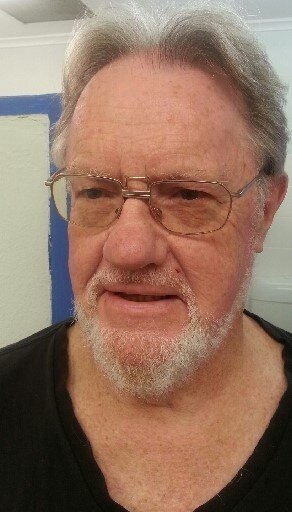
I contracted polio in 1947, aged 2 ½ years. I lived with my family of 6 in the village of Lorton in the Lake District of England. Apparently, the symptoms presented themselves one Sunday afternoon when we were out walking, and I suddenly fell to the ground without any warning. Attempts to get me to stand failed and after advice from our doctor, I was initially admitted to the hospital in Carlisle and after a few days was subsequently transferred to the infectious diseases’ hospital near Lake Windermere.
The location of the hospital was the most peaceful and encouraging environment for treatment and recuperation possible, with the vast lake clearly visible across the natural countryside. I had the opportunity to revisit the site only last year, being able to walk through the actual room in which I had been housed. (the whole complex is now a retirement village)
I was fortunate to receive the treatment promoted by Australia’s Sister Kenny, who strongly advocated the use of ‘hydrotherapy’ by placing us in shallow salt baths and encouraging us to kick and splash vigorously – something which 2-3-year olds were more than happy to do. Her treatment was in contrast to the accepted practice of the time, which was to put the affected limbs in irons, so the fact that I was able to pursue the more active life I later enjoyed was directly attributable to Sister Kenny’s treatment regime.
I was a patient there for several months during which time no contact was allowed with my family, though I believe my parents were able to come and ‘see’ me from a distance – without my knowledge. My parents relied totally on public transport, and in 1947 that was rather sparse, especially in rural Cumbria, so I can’t imagine how difficult the journeys would have been.
When the time came for my discharge, the perceived wisdom of the time being that I was cured, I was reluctant to go home….the staff of the hospital had become my ‘family’ so it was amid floods of tears that I went home with these ‘strangers’. My parents were advised to get me a tricycle and to encourage me to ride as much as possible. The prognosis of complete cure seemed to be vindicated, as I was able to take part in all the normal activities of a growing child. All that was conspicuous that I kicked with my left foot (otherwise right-handed). Consequently, my left leg developed to ‘iron man’ proportions! It seemed that only my lower legs had been affected... so from the knees up, everything worked as normal.
Unrelated to the polio was the fact that I became very obese during my teenage years but dealt with it by following a rigorous gym routine, which was not inhibited in the least by my bout of polio. I was then able to play cricket and squash (as if the world depended on it!) without any restriction… other than my lack of talent.
In my late teens I took up drum lessons and found that I could not lift my feet on the drum pedals to the extent other students were able to. I thought nothing of it as it was nothing more than a minor irritation. Everything continued without let or hindrance, until at some point in the 1980’s I noticed that I was automatically using my hands to help me stand up from a chair and when walking down stairs, my right heel would ’slap’ on the step unless I quite consciously controlled it. As time passed, I noticed that my left calf muscle was diminishing, and it was about then that the ‘Post-Polio Syndrome’ was identified world-wide. Since then my physical mobility has declined very very gradually without curtailing any of my activities to any great degree… until recently. I became aware a few years ago that I could no longer run or squat and more recently walking on uneven or sloping ground and climbing stairs has become almost impossible without some form of assistance ( so far a hand rail and staring at the ground is all that is needed ! )
I have been involved in Polio SA’s hydrotherapy programme for the last couple of years and have found the activity and the moral support a great encouragement in sustaining a positive attitude and a sense that it is possible to slow the deterioration. A two-week live-in assessment at Griffith Private Hospital proved to be most useful in the advice and activities available, reinforcing the assistance already rendered by Polio SA.
Dennis Johnson – Polio SA Member
Maurice Sorenson - My Polio Story
I am 73 years of age and still remember like it was yesterday the day my mum and dad took me to The Adelaide Children’s Hospital.
Looking up at the counter, holding on with my left arm, standing on my right leg, telling them I was ok.
Only to be diagnosed later with Polio in my spine, right arm, and left leg. I was 4 and a half years old, yes, I was vaccinated and soon to go to school. The next few months were spent in there and I will always be grateful and thankful for the love and care of my parents and everything the nurses and staff of the Children’s Hospital did for me.

I am 73 years of age and still remember like it was yesterday the day my mum and dad took me to the Adelaide Children’s Hospital.
Looking up at the counter, holding on with my left arm, standing on my right leg, telling them I was ok.
Only to be diagnosed later with Polio in my spine, right arm, and left leg. I was 4 and a half years old, I was soon to go to school. The next few months were spent in there and I will always be grateful and thankful for the love and care of my parents and everything the nurses and staff of the Children’s Hospital did for me.
A solid hardboard bed was waiting for me at home. Twice a week trip back and forth to the Children’s Hospital in the kangaroo ambulance for physio for the next year. Mum and Dad used to wheel me up and down Norwood Parade on a loaned hospital wheeled bed for outings with my younger brother Des hitching a ride down the bottom by my feet.
I started school a year later only to be at school for a few months and caught diphtheria from an inter-state girl, who took the chair next to me, I was saving for my cousin Valda due to start school soon too.
I then spent months in Northfield infection hospital. It was a horrible place for me as a child. My wife and I wheeled my brother in law around there in recent years. He was in Hampstead Rehab for cancer may he rest in peace.
I looked through the old derelict building’s dirty windows only to see exactly what I remembered so many years ago. White plastic covered mattresses and black and white striped covered pillows, bad memories and nightmares. I celebrated the day that building was demolished and lay in rubble on the ground.
I was fortunate to be able to recover enough and enjoy a relatively normal average and simple life in sport and work. I completed a fitting and turning apprenticeship, worked with the last company for 40 years, retired at 68 because of physical health.
I built a tee bucket hot-rod from the ground up that was used for hot-rod tours for 4 years. In 1982 I was very fit running 5.6k one lunch hour and 2.8 k the next with 2 other guys. One was a world marathon runner, of course, I could never keep up anyway. Halfway out on our long run one day I felt I had run out of energy like my whole body was sprained. I walked back to work. I hid my problems from all but my immediate boss at work, who I was grateful for his help and understanding and I didn’t lose any time from work except for treatment. I went to one of the top physios who said my leg was wasting away and put weights on it for exercise to build it up, but that made it worse. It was not making sense to me and felt more like fatigue. Shouldn’t be happening, rest, conserve energy and warm pool water helped. Looking for answers I came across a lady called Jan Holden (who I would like to contact again). A physio who had polio and caused her retirement. She was a very special lady and already in the process of looking into a possible later effect of polio. She took her cause and appeared with Ray Martin’s national tv current affair’s program to highlight it.
In 1985 I attended the first convened meeting for polio sufferers and survivors that Jan organised or helped organise at the Queen Elizabeth Hospital and I saw Dr. Lee when he was on Blacks Road, Gilles Plains. He was very helpful and caring. I was still in denial at that stage and individually went about trying to recover myself best I could. Years later I joined Post-Polio SA, can I thank Brett Howard especially for his decade of caring help, committee people and anyone else associated with Polio SA for their help and kind assistance and massage vouchers. Lee and Margot in hydrotherapy also for their patience, help, and understanding. I know my posture is of concern to me to and I do try, and for the odd Impromptu swimming stroke help to help me. It might not look it, but I am trying my best.
I haven’t had a reply from my latest survey or understood why most of my body is affected in some way but it’s because it’s in my spine. It’s odd but my right leg is worse now and severe restricted movement in back, shoulders, neck and arms and muscle fatigue. I have x-rays showing excess muscle effort pulling ligament off the bone. Warm water hydrotherapy, massage and carers care help a lot. I have to be careful I can enthusiastically try to do in the water what I have never been able to do. I hurt myself, learn, recover but never give up. I am so grateful to my parents, children’s hospital, guys and gals like Brett, Lee & Margot and others and still feel I am one of the lucky ones. Thank you so much.
My story is only a simple one, on a journey many others like us are on and still learning to cope with.
Find out what motivates you, use it and be happy doing your best.
Esther Simbi - My Polio Story
I am the youngest of six children and I am from the South Sudanese Kuku community. I speak the Kuku language and English. A few weeks after settling in my mother’s village Lomura, I contracted poliomyelitis. One morning in Lomura Village South Sudan, I woke up with a high fever and a body paralysed from neck to toe. I was not able to stand or sit up. My mother gave me a medicine made from local herbs, and she invented her own form of physiotherapy treatment where she massaged my body in cold water every morning.

Esther Simbi and Helen Leach at Esther’s Book Launch 2019.
I was born in Kajo-Keji South Sudan to a peasant family. I don’t know what year I was born. It was a home birth in the village with no birth certificate, so my mother didn’t remember the year I was born. The year of birth in my visa to Australia is 1977. I don’t look or feel 41 years old, so I calculated and guessed my age to a more realistic age which is 37 years. Unfortunately, I have not been able to change my age to the more realistic one here in Australia because I don’t have a Birth certificate to prove my age. If I was four when I contracted poliomyelitis, then I am 37 years old now but not 41. My father was a primary school teacher in 'Beliyak Primary School in Kajo-Keji South Sudan, and he also worked as a cleaner in Mundari Hospital in Kajo-Keji South Sudan. My mother didn’t have the opportunity to pursue education due to the South Sudanese cultural practices where women are trained to be housewives, mothers and family/community carers. My parents were divorce when I was four years old and my mother went to live with her relatives in a village called Lomura leaving me and my siblings with my father. In the South Sudanese culture, children belong to their father. In any case of marriage, relationship or family breakdown the woman will leave without her children and that was what my mother did. A few months later, my three sisters and I were reunited with our mother after our father took ill and was unable to look after us. I am the youngest of six children and I am from the South Sudanese Kuku community. I speak the Kuku language and English. A few weeks after settling in my mother’s village Lomura, I contracted poliomyelitis. One morning in Lomura Village South Sudan, I woke up with a high fever and a body paralysed from neck to toe. I was not able to stand or sit up. My mother gave me a medicine made from local herbs, and she invented her own form of physiotherapy treatment where she massaged my body in cold water every morning. She also tied my hands to two poles to support me, and she left me to stand there for an hour every morning and evening for two to three months. I had to learn to sit and to walk again, and I eventually regained strength in my upper body. Thanks to my mother, who worked tirelessly, I was able to walk again, though with great difficulty.
There was no immunisation available in South Sudan when I was born to immunise children against polio. I was left with a weak lower back, a deformed and painful right foot, and a very weak left leg. My left leg is 2 inches shorter than my right leg which makes balancing difficult when walking. I bend forward when walking, putting a lot of strain and pain on my lower back. I now suffer from post-polio syndrome, which is associated with headaches, muscle, bone and joint pain, fatigue, and general body exhaustion. I limp and have a lot of falls causing injuries. In December 2015 when I was pregnant with my now 3-year-old daughter, I had a fall and fractured my left ankle. Wearing a plaster for 6 weeks meant that I had to learn to walk again as the plaster had weakened my left leg muscles even more. I am on a waiting list for surgery to fix my right knee. I am on medication to manage the pain in my right knee. I use a wheelchair outside of the house to access the community. I try not to use the wheelchair much to keep my muscles strong and active. I use my left arm to push my left knee back when I am walking for balance to aid my mobility. I have damaged my left elbow because of the way I walk and now I am waiting for surgery to fix my elbow. When I was young, my legs muscles were stronger and I was able to walk for 10 to 15 minutes without resting but after I turned 25 years old here in Australia, my muscles started to weaken. Now I cannot walk for five minutes without resting and falling. My sight in my left eye is weaker than the sight in my right eye. I also choke while swallowing. I now see a speech pathologist funded by NDIS to manage my swallowing. I was diagnosed with late effects of polio called Post-Polio Syndrome here in Australia 13 years ago.
In 1987, my family and I fled the Sudan civil war and resettled in Uganda where I grew up in three different refugee camps for 19 years before migrating to Australia. I migrated to Australia in July 2005 as a refugee where I completed a bachelor’s degree in social work in 2007 and a master’s degree in Mediation and Conflict Resolution in 2014 at the University of South Australia. I am a single mother of two beautiful daughters aged 8 and 3 years old. I worked with Families SA and Disability SA from December 2007 to July 2013 as a social worker, Case Manager, Service Coordinator, Intake Coordinator and as a Facilitator. I was also the Founder of, and the Coordinator for, the Crossing the Bridge Project in 2014 which was aimed at supporting African Women with Disabilities in South Australia, and supporting mothers of African children with disabilities as wells wives and female family members of African men with disabilities in South Australia. I ran for Parliament with Dignity Party SA (formerly known as Dignity for Disability) in the Upper House as a Lead candidate for the South Australia’s State Election in 2014 and I was also on the Dignity Party’s Upper House ticket for the 2018 South Australia’s State Election, representing people with disabilities in South Australia. I was the first African Woman from a refugee background to run for Parliament in Australia.
In March 2019, I published my first book Beyond Calamity which is the story of my life journey, contracting polio in South Sudan as a 4 year old girl and surviving that, growing up in 3 different refugee camps in Uganda, growing up and overcoming challenges as a girl and as a woman with a disability in the South Sudanese Community, migrating to Australia as a refugee 14 years ago and overcoming challenges on a daily basis as a single mother and as a woman with a disability. My book is available on the publisher’s website Vividpublishing.com.au/beyondcalamity and it’s $30.
After reading Esther’s Book if you could leave an online review it would be appreciated.
My Polio Story - Kim Doung
I was born in Cambodia in 1984, and contracted polio when I was less than one. Throughout my childhood, my parents took me to various doctors, based on recommendations, so I’ve had many different treatments
When I was nine years my family and I emigrated to Australia. When we settled in Adelaide, the doctors at the Women’s & Children’s Hospital began to treat the effects of my polio straight away.

I was born in Cambodia in 1984, a second child to my parents after my older brother. When I was less than one year old, I was diagnosed with polio. I don’t remember a lot about it. My parents say that they first noticed I had a fever, and so took me to a nurse, who gave me an injection. The next day, I couldn’t use my leg. They then took me to a doctor, who confirmed that I had polio, and said it was too late to do anything about it.
Throughout my childhood, my parents took me to various doctors, based on recommendations, so I’ve had many different treatments. I remember once I was taken to another province, where I stayed for a couple of months to have acupuncture specifically for polio. The acupuncture needles were attached to an electric device that emitted a pulse. I just remember how painful it was! I’m not sure if it worked. Regardless, after the polio, I had one leg shorter than the other, which was also weaker.
When I was nine years old, my family - which now included my younger brother - and I emigrated to Australia. When we settled in Adelaide, the doctors at the Women’s & Children’s Hospital began to treat the effects of my polio straight away. They decided to try to extend the bone in my shorter leg, while I was still young. They were able to increase it by several centimeters, by cutting the bone in my shin, and attaching a metal gadget to each end of the cut bone. Each night I had to wind apart the gadget, so the bone would become longer as it regenerated. It wasn’t too painful, but I was on crutches for six months.
Polio has affected my life to this day, physically and mentally. Physically, there are a few things I can’t do, such as running for long periods of time, swimming very well, or driving manual cars – luckily, now everything’s automatic. Shoes are difficult to find, because one foot is smaller than the other.
Mentally, I am more conscious of my left leg being different from my right. When I was a kid, I got bullied all the time by other kids about it. This stuck with me for a long time. I often wear long clothing to hide my legs.
I am 34 now and I am concerned about polio affecting my life more as I grow older. I feel like my body has had more pain now in the last few years, especially on the right side. My conclusion is that because I don’t have a balanced core, my right side has to compensate for my weaker left side, so it’s impacting on my right leg, shoulder and lower back.
From doing my own research, I’ve learnt that 30 years after you contract polio, you can develop the sort of symptoms I have – the late effects of polio (LEoP). It seems even my doctors and physiotherapists don’t understand what I’m experiencing, due to a lack of awareness about this.
A friend mentioned that there is a polio support group in Australia, so I looked it up online and found Polio SA. I've only recently joined, so am still discovering what’s available, but I found their guest speakers at the annual general meeting very informative.
Back in Cambodia, polio is more common. My uncle who still lives in Cambodia had polio too, but his effects are far more severe, affecting his left arm and left leg. Due to it being a developing country, and the lack of government assistance, people with polio have to depend on family members to support them for everyday living. This is not easy if your family is poor.
Vaccination against polio is necessary as prevention. It’s still happening all over the world, in pockets here and there. The more information we can spread about this, the better.
Although the medical system is better in Australia, and the treatments I received here as a child, I still experience pain and I need to see health professionals for treatment. I have to pay myself to see physiotherapists, massage therapists and acupuncturists to manage my pain. Polio SA membership has assisted with some vouchers to help pay for therapy and massage, and they have also been happy to discuss any questions I have.
The more the government can fund Polio SA and Polio Australia, we can put that to good use, in terms of providing support to people with polio, spreading understanding in the community, and knowledge with people who have polio, and to their families as well. Sharing information with people in different cultural groups, in the different languages they speak, would also help raise awareness and understanding of polio, and the effect it has on people living with polio.
I’d like the community to understand the ongoing impact that polio has on those of us who have experienced it – physically as well as emotionally.
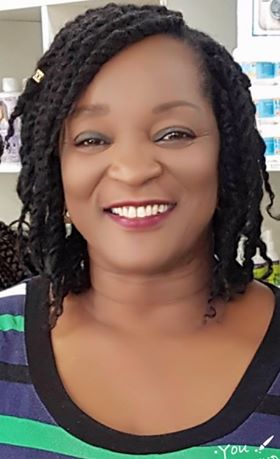
My Polio Story - Lynda Shaw
I was born in Ghana, West Africa in 1955, where at just one year old I contracted poliomyelitis. While I can recall some childhood memories of leg stretches and massages, my main recollection of treatment for my polio was an operation I had on my leg aimed at lengthening my Achilles tendon and straightening my foot.
In 1980, I migrated to Australia settling in Adelaide, soon after arriving, I was fortunate to have a second operation on my leg, as the first one I underwent as a child in Ghana had been done prematurely – before I had finished growing.

I was born in Ghana, West Africa in 1955, where at just one year old I contracted poliomyelitis.
While I can recall some childhood memories of leg stretches and massages, my main recollection of treatment for my polio was an operation I had on my leg aimed at lengthening my Achilles tendon and straightening my foot. The polio had left the tendons in my leg shorter, bringing my heel up, and causing me to walk on the ball of my foot.
In 1980, I migrated to Australia settling in Adelaide, where I married, had a family, and worked in records management at Glenside Hospital and the South Australian Ambulance Service. Soon after arriving in Australia, I was fortunate to have a second operation on my leg, as the first one I underwent as a child in Ghana had been done prematurely – before I had finished growing. By having my foot and ankle reconstructed, my heel was again in the correct position and I could walk without limping. Unfortunately, this progress was undone after a fall at a work conference, where I tripped and landed on my foot. Four months with my leg in plaster resulted in significant weakening my muscles. I now walk with a limp, and with the assistance of a walking stick for long distances.
As I’ve grown older the late effects of polio (LEoP) have begun to appear. Since the age of 58, I have experienced symptoms on my affected side, including weakness in my right leg, joint pain, issues with my right eye and shoulder, periodic falling, and even choking. I also take medication to help with pain in my left hip – as this is my ‘good’ hip which is overused and becomes painful. My polio is exacerbated by polymyalgia, diagnosed about four years ago. This increases joint pains and general lethargy.
Polio SA has been a support to me. Through Polio SA membership I was able to access hydrotherapy lunchtime group sessions at Thebarton Swimming Centre, prior to its relocation to Noarlunga. The exercises in the water, led by therapists, helped a lot through strengthening and stretching my muscles. I also find the tips in the newsletter very helpful.
I feel there is little understanding and recognition to date of the Late Effects of Polio by the wider community. I know that there are other African migrants in Adelaide who are living with the Late Effects of Polio. I’m trying to organise a meet-up so that we can share our stories and information, and encourage them to join Polio SA, to work out how we can access better support for our condition.
In African culture, discussion of any type of disability can be a bit of a taboo, even to the extent that some people have the mentality that those with any form of disability are below others. In contrast, I was brought up in a family where everyone is equal, all treated the same. Dad was a surgeon, Mum was a midwife, so they knew more about what to do to help me. I was encouraged – ‘you have two legs, two arms, you can do anything you want to, and are capable of achieving anything you set your mind to’. So, I’m attempting to reach out to other African polio survivors here in Adelaide to share information. I’m slowly getting through to the various groups, and I’m not giving up.
I feel that the medical profession needs to be educated more fully on how to help patients experiencing the Late Effects of Polio. Currently, many medical professionals are younger people, who might not have had much experience in polio patients. For example, general anaesthetic needs to be administered very carefully to people who have had polio; such patients can have adverse reactions.
Governments need to better fund support for polio survivors through organisations like Polio SA, and raise the profile of our needs. People see us in the community and know that we have a disability, but they don’t know what it’s about.
Polio SA has been helpful, and I would love the community to be more aware of the work it does. Having services like hydrotherapy offered more centrally would help more polio survivors. A discount on aids, like walking sticks and other mobility devices would be valuable.
In addition, vaccination against polio is vital, so younger generations aren’t affected. We need to be vigilant and proactive to make sure people are vaccinated to fully eradicate polio across the world.
While the Late Effects of Polio can be difficult to manage sometimes, my advice to other polio survivors in our community experiencing these symptoms in later life is: eat healthily, watch your weight, take low-impact exercise, and seek support from Polio SA. I’ve also had success with eating an alkaline diet and drinking alkaline water. Networking with other polio survivors is so valuable too, allowing us to share our experiences and knowledge to help each other.
A Polio Survivor Story by Julian Swinstead
I was born June 1949 and contracted polio when I was about 2 years old and was sent to Escourt House for around 2-3 yrs.
My parents were poor and had five boys. They could only come and see me occasionally on weekends. When they did, Dad unscrewed a door from home and tied it to the roof of the Volkswagen Beetle.
I was born June 1949 and contracted polio when I was about 2 years old and was sent to Escourt House for around 2-3 yrs.
My parents were poor and had five boys. They could only come and see me occasionally on weekends. When they did, Dad unscrewed a door from home and tied it to the roof of the Volkswagen Beetle. They would come and get me and strap me to the door on the roof (outside) for an outing. Later they got a bigger car and could slide me through the back windows (on a board) where my brothers would torment me.
I cannot remember anything much about that time. I was in plaster from the hips down, or so I have been told. Matron Macdonald at Escourt House told my parents she was experimenting with a new technique for handling polio which she had heard of from America. It involved NEVER allowing the affected limbs to be free of restraint — such as keeping them in plaster or calipers, especially overnight. NEVER allowing the bones to deform. Apparently my Dad said I was in great pain continually, and I do remember being put in the big bathroom at Escourt House (the empty bath) with the door shut, because I screamed so much. I do remember that that was very scary. But boy it must have worked. After leaving Escourt House I then wore callipers and attended the Adelaide Children’s Hospital for several years for therapy.
I apparently recovered despite a deformed left calf muscle and a leg that was measured as half an inch or so shorter than the other one. I managed to play A grade SANFL football for Central Districts and football in Melbourne for Port Melbourne. I was also active in many other sports including running, tennis, swimming etc. When I finished football (at age 32) I took up martial arts and have done that (seriously) for 30 odd years, as well as tennis, cycling, swimming and stand up paddling.
I have recently returned to Adelaide to live after 25 years away (Darwin). I had a period where I simply would run out of “juice” and my legs were sore. That was around 10 years ago. I had to pretty much give up karate kicks above hip height. However I have since decided “stuff it” and have resumed serious training. I have had a total knee replacement, ironically on my other leg. That also set me back as I had all sorts of warnings about not doing too much.
I now walk at a very fast pace around five kilometres at least every second day, interspersing that along the walk with challenging exercises, including push-ups, chin ups, squats, rowing and cycling; and stretching routines. I walk on unpaved areas wherever possible to exercise my ankles etc. and thick grass to force me to lift my legs. While my left calf muscle remains deformed (seriously under developed) I am feeling more and more comfortable in my fitness. I am also playing tennis again.
My orthopaedic guy says the other knee is going to have to be replaced, but at present it is fine.
That’s my story. Hope it is of interest to someone. If, for the purposes of research, you needed more information, my older brothers know much more about that time than I do. Although I have not spoken to them regarding this note, I am sure they would not mind speaking about it.
| Categories |
| Search by year |
Are you a polio survivor?
Sharing your story can help others. If you would like to share email us.